

What's Happening?
Puerto Rico is facing severe drought conditions, prompting the implementation of water rationing measures in San Juan and other major cities. Starting Friday, over 180,000 customers will experience water outages for 48 hours at a time as part of an alternating
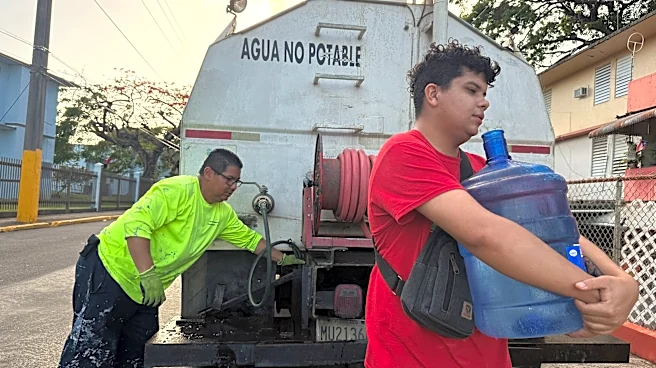
schedule. The drought has led to July being the driest month on record for San Juan in over 120 years. Governor Jenniffer González has stated that the situation is beyond control, with no immediate relief expected. The rationing will affect neighborhoods in cities such as Carolina, Juncos, and Trujillo Alto. Large trucks will distribute potable water, prioritizing hospitals and residences for the elderly.
Why It's Important?
The water rationing measures highlight the critical impact of climate change and natural weather cycles like El Niño on Puerto Rico's infrastructure and daily life. The drought exacerbates existing water shortages, affecting public health and safety, particularly for vulnerable populations such as the elderly and those in hospitals. The situation underscores the need for investment in infrastructure and sustainable water management practices. The economic implications are significant, as water scarcity can affect agriculture, industry, and tourism, key sectors in Puerto Rico's economy.
What's Next?
The duration of the water rationing measures remains uncertain, with experts predicting continued dry conditions until at least September. The Puerto Rican government and water authorities are under pressure to address the infrastructure issues that have contributed to the water crisis. Legal actions, such as the lawsuit by San Juan Mayor Miguel Romero against the Water and Sewer Authority, may push for more transparency and accountability. The situation calls for long-term strategies to mitigate the effects of climate change and improve water resource management.