



What's Happening?
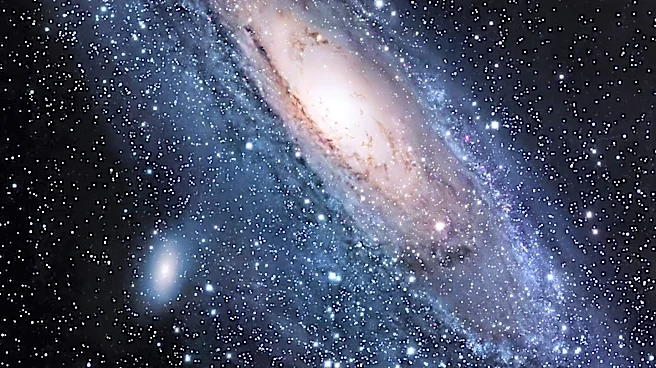
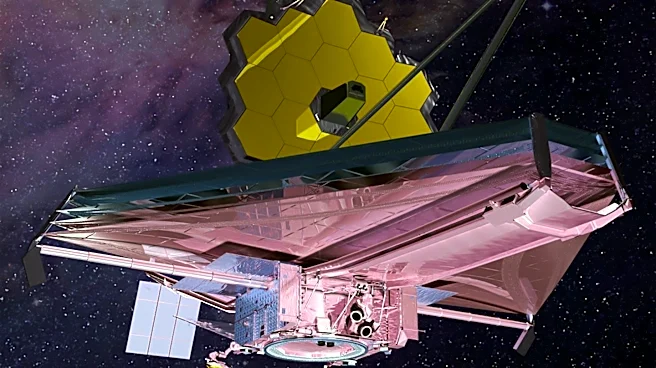
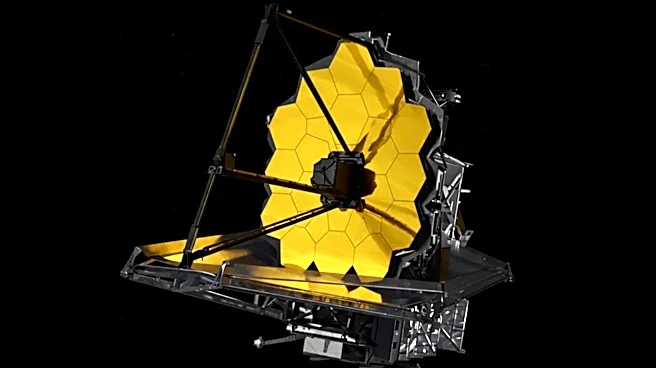
The James Webb Space Telescope (JWST) has examined two stars previously suspected of harboring Dyson spheres, only to discover that the stars were actually aligned with distant galaxies. These galaxies were producing a warm infrared glow, which mimicked
the waste heat expected from a hypothetical Dyson sphere. The research, led by astrophysicist Olivia Curtis of Pennsylvania State University, involved untangling light and working around JWST's quirks to reveal that the light from both stars was being boosted by a distant galaxy almost perfectly lined up behind them. This discovery not only ruled out the Dyson sphere candidates but also provided valuable insights for future searches, highlighting the importance of identifying false positives in the quest for alien technology.
Why It's Important?
This finding is significant as it demonstrates the challenges and complexities involved in the search for extraterrestrial intelligence. By ruling out these Dyson sphere candidates, astronomers have gained a better understanding of how the universe can mimic technosignatures, which are indicators of advanced alien civilizations. The research also underscores the importance of developing new techniques to differentiate between genuine and false signals, which will enhance the reliability of future searches. Additionally, the discovery of the galaxies provides new opportunities for scientific exploration, as they are scientifically interesting in their own right.
What's Next?
The next steps involve using the findings to refine search techniques for alien technology and to continue exploring the newly discovered galaxies. The alignment of the stars and galaxies offers a unique opportunity for future telescopes to use the closer star as an adaptive optics guide while observing the more distant galaxy. This could lead to further discoveries and a deeper understanding of the universe. The research also sets a precedent for future surveys, which will benefit from the techniques and insights gained from this study.