








What's Happening?
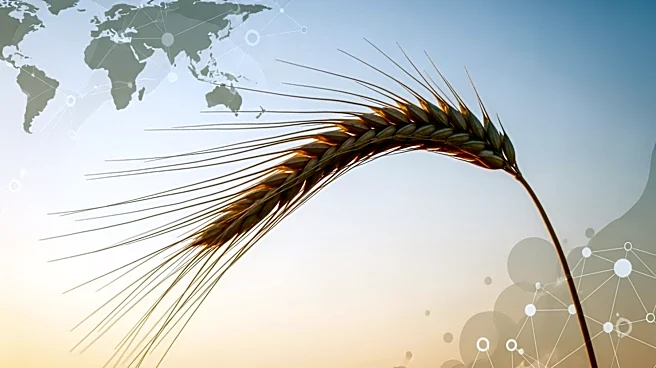
A recent systematic review published in Humanities and Social Sciences Communications highlights the vulnerabilities of global food security, particularly concerning staple crops like maize, rice, and wheat. The review identifies major drivers of food insecurity,
including climate change, geopolitical conflicts, and trade disruptions. The study emphasizes the need for policy and technological interventions to enhance food availability and resilience. Examples such as the COVID-19 pandemic and the Russia-Ukraine war illustrate how quickly food systems can be destabilized. The review suggests strategies like international trade agreements, agricultural advancements, and virtual water trading to mitigate these threats.
Why It's Important?
The findings of this review are crucial as they address the interconnected environmental, economic, and geopolitical forces impacting global food security. With climate change posing a significant threat to crop production, and geopolitical conflicts affecting trade, the study underscores the importance of developing comprehensive strategies to ensure food access. This is particularly vital for low-income and food-deficient nations vulnerable to climate shocks and supply chain disruptions. The review's insights could guide policymakers in creating resilient food systems that can withstand global challenges.