



What's Happening?
The U.S. Department of State has issued a Level 4 'Do Not Travel' advisory for Niger, citing escalating security threats including terrorism, kidnapping, violent crime, and civil unrest. This advisory, released on January 30, 2026, highlights the inability
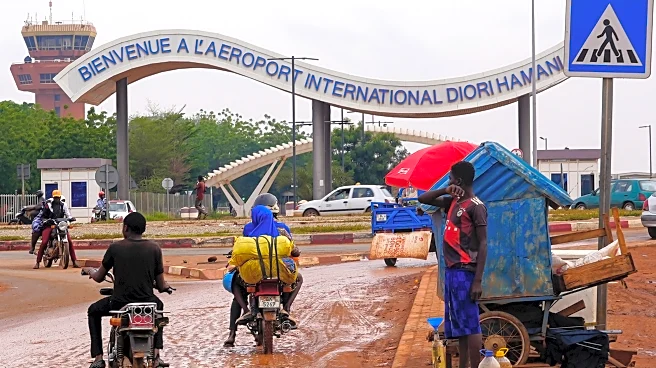
of U.S. authorities to provide routine or emergency consular services outside the capital, Niamey. The decision follows recent incidents such as a gunfight involving Islamic State-affiliated militants at Diori Hamani International Airport. The advisory also notes that non-emergency U.S. government employees and their families have been ordered to leave Niger. The inclusion of Niger brings the total number of African countries under the U.S. government's highest travel alert to eight, alongside Libya, Mali, Burkina Faso, the Central African Republic, South Sudan, Sudan, Somalia, and parts of the Sahel.
Why It's Important?
The Level 4 advisory for Niger underscores the severe security challenges facing the region, which have significant implications for U.S. foreign policy and international relations. Such advisories typically lead to a decline in tourism and foreign investment, as well as reduced diplomatic engagement. The advisory reflects broader concerns about structural insecurity in parts of Africa, where persistent violence and governance issues are prevalent. For U.S. citizens and businesses, this advisory signals heightened risks and necessitates increased caution when considering travel or operations in the region. The advisory also impacts U.S. diplomatic efforts, as embassies may scale back operations, further limiting engagement with the host country.
What's Next?
The U.S. government will likely continue to monitor the security situation in Niger and other affected regions closely. Future adjustments to travel advisories will depend on changes in the security environment. U.S. citizens in Niger are advised to follow local security protocols, including using military escorts when traveling outside the capital. The advisory may prompt other countries to reassess their travel advisories for Niger, potentially leading to a broader international response. Additionally, the U.S. may engage with international partners to address the underlying causes of instability in the region, such as terrorism and weak governance.