
What's Happening?
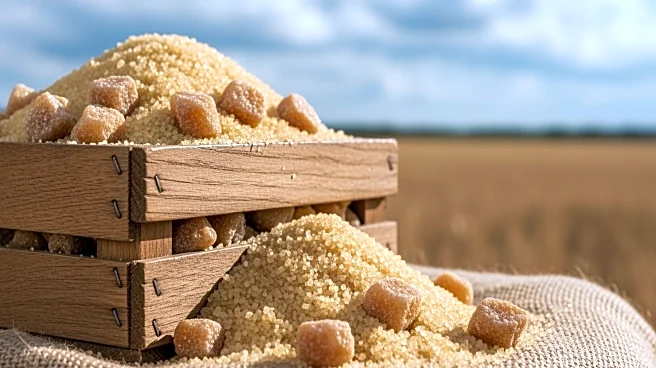
The Department of Agriculture (DA) has announced an extension of the sugar import ban until December 2026, a decision driven by current production and demand trends. Agriculture Secretary Francisco Tiu
Laurel Jr. emphasized the need to prioritize locally produced sugar to stabilize the market. The DA plans to intensify monitoring of refinery operations to prevent supply distortions and speculative pricing. Additionally, the government is finalizing a regulatory framework for molasses imports, requiring users to purchase local molasses before importing. This approach aims to reduce corruption risks and boost demand for domestic sugar.
Why It's Important?
The extension of the sugar import ban is crucial for the domestic sugar industry, as it seeks to protect local producers and stabilize market prices. By prioritizing local production, the DA aims to support farmers and ensure a steady supply of sugar. This policy could lead to increased farmgate prices, benefiting local economies. However, it may also result in higher consumer prices if domestic production cannot meet demand. The regulatory framework for molasses imports further underscores the government's commitment to supporting local agriculture and reducing reliance on imports.
What's Next?
With the extended import ban, the DA will likely continue to monitor market conditions and adjust policies as needed. The success of this initiative will depend on the ability of local producers to meet demand and maintain competitive prices. Stakeholders, including sugar producers and consumer advocacy groups, may engage in discussions with the government to address potential challenges. The finalization of the molasses import framework will also be a key focus, as it could impact the broader agricultural sector and related industries.