
What's Happening?
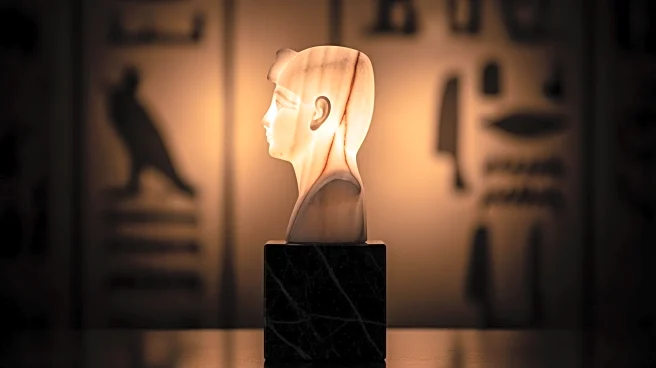
Egyptian archaeologists are intensifying efforts to repatriate the bust of Nefertiti from Berlin to Egypt. The bust, a nearly 3,400-year-old artifact, has been housed in Berlin's Neues Museum since 2009,
drawing significant visitor interest. The campaign for its return is led by prominent figures such as Monica Hanna and Zahi Hawass, who argue that the bust belongs in Egypt, especially with the recent opening of the Grand Egyptian Museum in Giza. This new facility is seen as a world-class venue capable of housing Egypt's archaeological heritage, countering previous arguments that Egyptian artifacts are better preserved abroad. Despite historical attempts to repatriate the bust, including during the Nazi era, German authorities remain reluctant to return it, citing concerns over transportation risks.
Why It's Important?
The push for the return of Nefertiti's bust highlights ongoing debates about cultural heritage and the ethics of artifact possession. The opening of the Grand Egyptian Museum strengthens Egypt's position in these discussions, showcasing its ability to preserve and display its historical treasures. Successful repatriation could set a precedent for other artifacts held abroad, potentially leading to broader restitution efforts. This movement reflects a shift in global attitudes towards colonial-era acquisitions, with increasing pressure on institutions to return items to their countries of origin. The outcome of this campaign could influence international policies on cultural heritage and impact museum collections worldwide.
What's Next?
The campaign for the bust's return is gaining momentum, with petitions gathering significant support. Zahi Hawass aims to collect one million signatures to bolster the case for repatriation. However, the German museum authorities have not indicated any willingness to negotiate the return, citing the fragility of the artifact. The political climate around repatriation is evolving, with recent examples of artifact returns from Germany to Nigeria and Ethiopia. If successful, the return of Nefertiti's bust could encourage similar efforts for other famous artifacts, potentially reshaping museum landscapes across Europe.
Beyond the Headlines
The debate over Nefertiti's bust raises questions about the legacy of colonialism and the moral implications of historical artifact acquisitions. The artifact's fame and cultural significance make its repatriation a complex issue, with potential diplomatic ramifications. The campaign also underscores the role of cultural heritage in national identity and pride, as Egypt seeks to reclaim symbols of its ancient civilization. The broader movement for artifact restitution may lead to increased collaboration between countries and museums, fostering a more equitable approach to cultural heritage management.