
What's Happening?
The Trump administration has dismantled the Department of Justice's Community Relations Service (CRS), a unit established in 1964 to mediate and de-escalate tensions during protests and civil unrest. This
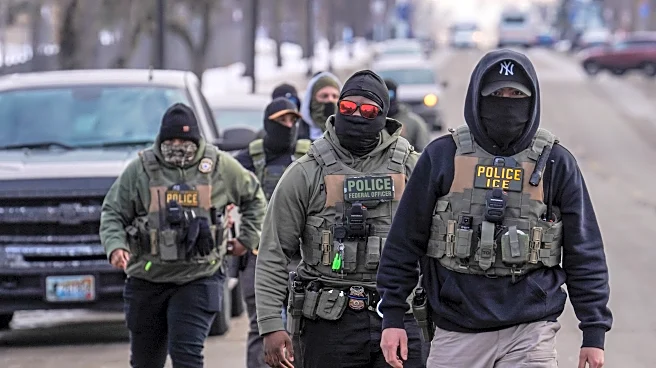
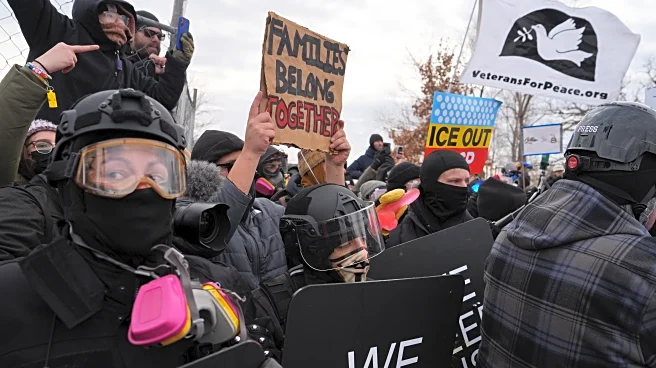
decision comes amid heightened tensions following recent shootings by federal immigration enforcement agents, which have sparked over 1,000 planned protests nationwide. The CRS was known for its role in defusing conflicts and fostering communication between law enforcement and communities, notably during events like the Selma marches and the aftermath of George Floyd's murder. The shutdown of the CRS, which had 57 employees and 30 field offices, was justified by the DOJ as not aligning with its current law enforcement priorities.
Why It's Important?
The closure of the CRS removes a critical tool for managing civil unrest and fostering trust between communities and law enforcement. The unit's absence could lead to increased tensions and potentially more violent confrontations during protests, as seen in recent incidents in Minnesota and Portland. The CRS played a vital role in preventing violence and promoting dialogue, which is crucial in a time of rising political violence and civil rights challenges. The decision to dismantle the CRS has been met with criticism from civil rights groups and former officials, who argue that its absence leaves communities with fewer options for peaceful resolution and accountability.
What's Next?
Civil rights groups have filed lawsuits to restore the CRS, and there is a proposal in the House budget to allocate $20 million for its revival. The Senate is expected to vote on this budget soon. Meanwhile, the DOJ has transferred some CRS functions to other departments, but it remains unclear if this will effectively replace the unit's comprehensive mediation role. The outcome of these legal and legislative efforts will determine whether the CRS can be reinstated to continue its mission of conflict resolution and community engagement.
Beyond the Headlines
The dismantling of the CRS highlights broader issues of governmental priorities and the handling of civil rights enforcement. The decision reflects a shift in focus away from mediation and community relations towards a more enforcement-centric approach. This change could have long-term implications for how civil rights issues are addressed in the U.S., potentially leading to more adversarial relationships between communities and law enforcement. The situation underscores the importance of maintaining mechanisms for dialogue and trust-building in a diverse and often divided society.