






What's Happening?
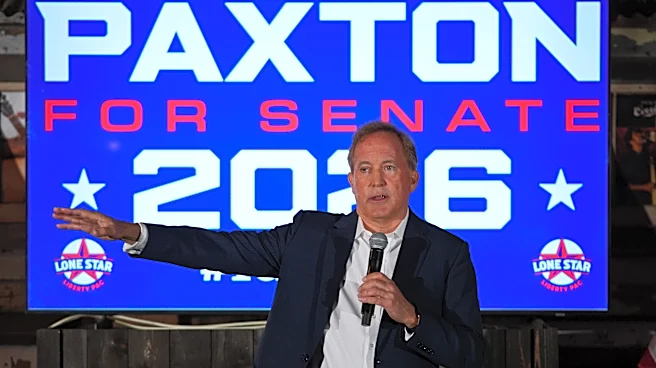
The Texas Senate race has become unexpectedly competitive following Ken Paxton's nomination as the Republican candidate. Paxton, supported by President Trump, faces Democratic nominee James Talarico, a young and charismatic figure who aims to unite Democrats
and appeal to disaffected Trump voters. Paxton's candidacy is complicated by past scandals, including impeachment and legal investigations, which may deter some Republican voters. Talarico's campaign focuses on engaging voters on cultural and religious topics, presenting a stark contrast to Paxton's approach. The race is seen as a potential opportunity for Democrats to gain a Senate seat in a traditionally Republican state.
Why It's Important?
A Democratic victory in Texas would be a significant political shift, potentially altering the balance of power in the Senate. The race highlights the changing dynamics within the Republican Party, as candidates with strong ties to President Trump face challenges in appealing to a broader electorate. The outcome could influence national political strategies, as both parties assess their approaches to engaging diverse voter bases. Texas, with its diverse population and economic significance, serves as a microcosm of broader national trends, making this race a focal point for political analysts.
What's Next?
As the general election approaches, both parties will intensify their efforts to sway voters. Democrats will focus on mobilizing their base and appealing to independents, while Republicans aim to consolidate support for Paxton despite his controversies. The race is expected to be costly, with significant investments in advertising and outreach. The outcome will depend on voter turnout and the ability of each candidate to effectively communicate their message and address voter concerns.