





What's Happening?
After the Coachella Valley Music and Arts Festival concludes, the Empire Polo Club in Indio, California, undergoes a significant transformation. The site, which also hosts the Stagecoach festival shortly after Coachella, is rapidly reconfigured for different
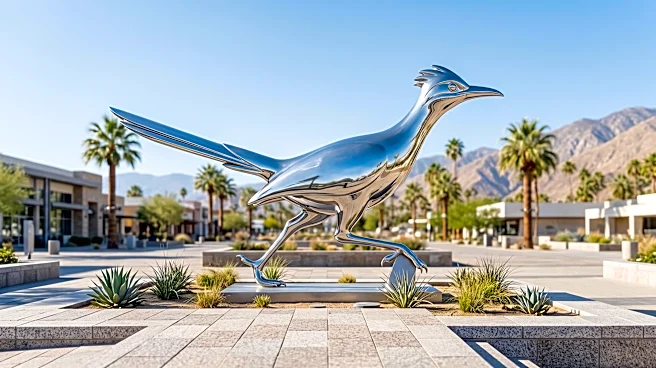
events. This involves the teardown of temporary structures and the setup for the next event, often happening simultaneously. Beyond the immediate changeover, the site's infrastructure and materials have an afterlife. The Galilee Center in Mecca partners with Goldenvoice to collect usable goods, such as air mattresses, canopies, and food, for donation to those in need. The Coachella Valley Rescue Mission also collects surplus food from caterers. Some art installations, like the Spectra tower, remain permanent features, while others, like the metal Roadrunner sculpture, are acquired by local cities for public art collections.
Why It's Important?
This detailed look into the post-festival operations highlights the significant logistical and community impact of large-scale events like Coachella. The rapid transformation between festivals demonstrates the sophisticated event management required to host such massive gatherings, contributing to the local economy through employment and specialized services. More importantly, the partnerships with local non-profits like the Galilee Center and the Coachella Valley Rescue Mission showcase a commitment to sustainability and community support, mitigating waste and providing valuable resources to underserved populations in the Coachella Valley. This model offers a blueprint for other large events to integrate social responsibility into their operations, turning potential waste into community benefit. The preservation of certain art installations also contributes to the cultural landscape of the region.
What's Next?
The Empire Polo Club continues to be a dynamic venue beyond the April festivals. Goldenvoice's year-round operational control allows for a diverse range of events, including sporting events like the Coachella Valley Invitational for MLS and NWSL clubs, and community services such as free healthcare clinics. The ongoing efforts to manage waste and donate usable materials will likely continue, with non-profits playing a crucial role in the afterlife of festival resources. The permanent art installations will remain part of the landscape, and local cities may continue to acquire temporary art pieces for public display, further integrating the festival's legacy into the community.
Beyond the Headlines
The post-festival activities at Empire Polo Club reveal a complex ecosystem that extends far beyond the music and art. It underscores the environmental and social responsibilities inherent in hosting events of this magnitude. The efforts to repurpose materials and donate surplus goods challenge the perception of festivals as purely consumptive events, highlighting their potential for positive community impact. The integration of permanent art and the acquisition of temporary installations by local municipalities demonstrate how cultural events can leave a lasting physical and artistic legacy. This also raises broader questions about the role of large corporations in local community development and environmental stewardship, showcasing a model where economic activity can be intertwined with social good.