






What's Happening?
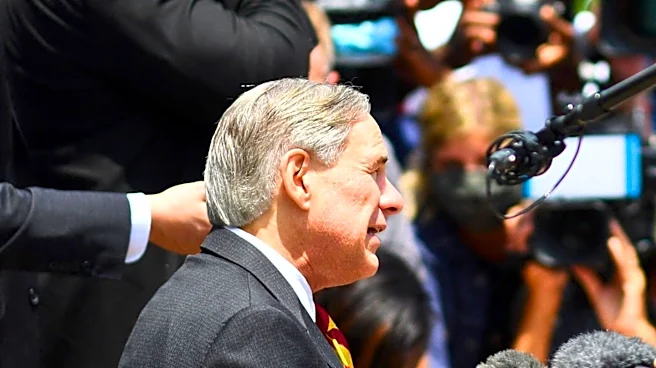
Texas Governor Greg Abbott has initiated an investigation into the financial practices of public school districts across the state. He has specifically requested Texas Comptroller Don Huffines to examine up to four independent school districts (ISDs)
to ascertain if taxpayer money is being adequately allocated to students and teachers. Governor Abbott's primary concern is to prevent funds from being absorbed by 'central-office growth, administrative bloat, consultants, and the web of noninstructional bureaucracy.' During a press conference in El Paso, Abbott highlighted Austin ISD (AISD) as an example, noting that its enrollment declined by 14% between 2015 and 2025, while administrative spending per student increased by 75% during the same period. This directive aims to ensure greater financial accountability within the state's education system.
Why It's Important?
This investigation carries significant implications for public education funding and policy in Texas. If the investigation reveals widespread administrative inefficiencies or excessive spending, it could lead to legislative changes impacting how school districts manage their budgets. Governor Abbott has proposed legislation that would mandate school districts to allocate at least 70% of their funds directly to classroom expenses, rather than administrative costs. This could drastically alter the financial structures of ISDs, potentially reallocating resources towards instructional staff and student programs. While some experts, like Dr. Rachel White from UT Austin's College of Education, point out that fixed costs do not always shrink proportionally with declining enrollment, the push for a 70% classroom spending threshold could force districts to 'right-size' their administrative operations. The outcome of this investigation could set a precedent for financial oversight in other state-funded sectors and influence future legislative sessions regarding educational funding.
What's Next?
The Comptroller's Office is expected to announce the specific school districts that will be investigated in the coming weeks. Governor Abbott has requested the investigation's results by December 31, 2026, which is strategically timed before the 2027 legislative session in January. This timeline suggests that the findings will directly inform and potentially shape new legislation aimed at reforming school finance. Major stakeholders, including school district leaders, educators, and parent advocacy groups, will likely be closely monitoring the investigation's progress and its eventual recommendations. The proposed 70% classroom spending mandate, if enacted, would necessitate significant adjustments in budgeting and resource allocation for many Texas ISDs, potentially leading to debates and challenges regarding its feasibility and impact on educational quality.
Beyond the Headlines
Beyond the immediate financial implications, this investigation touches upon deeper issues of public trust and governmental oversight in education. The focus on 'administrative bloat' reflects a broader public sentiment regarding the efficient use of taxpayer money, particularly in essential services like schooling. The debate over what constitutes 'administrative' versus 'instructional' spending can be complex, as many district-level positions indirectly support student learning. The investigation could prompt a re-evaluation of the metrics used to assess financial health and educational effectiveness, moving beyond simple enrollment figures to consider the qualitative impact of spending. Furthermore, the emphasis on a fixed percentage for classroom spending raises questions about the flexibility districts need to address unique local challenges and innovative educational programs. This initiative could spark a statewide conversation about the optimal balance between centralized oversight and local autonomy in managing public school finances.