







What's Happening?
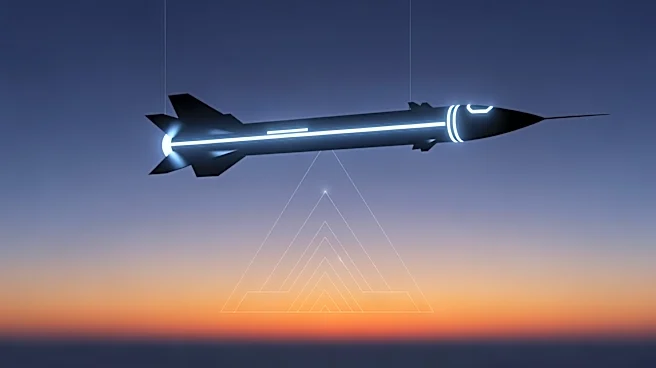
The United Kingdom and France have embarked on a collaborative study to develop a successor to the MBDA Meteor missile, a beyond-visual-range air-to-air missile currently used by their Eurofighter Typhoons and Dassault Aviation Rafales. Announced on April
1, the study is set to last 12 months and aims to assess future threat landscapes and develop new missile concepts to address air warfare challenges in the coming decades. This initiative is part of a memorandum of understanding between the two nations, highlighting their commitment to maintaining air superiority. The study will explore which technologies should be integrated into a next-generation weapon system and establish a development roadmap. The Meteor missile, developed through a six-nation program, has been in service since 2016 and is being integrated into various aircraft, including the Lockheed Martin F-35B for the UK and Italy.
Why It's Important?
This joint study between the UK and France is significant as it underscores the strengthening of NATO's capabilities and European security through collaborative defense efforts. By working together on the next generation of air-to-air missiles, the two countries aim to ensure continued air superiority and address evolving threats. The development of a new missile system is crucial for maintaining a technological edge in military aviation, which is vital for national defense and international security. The initiative also reflects the broader strategic partnership between the UK and France, as they are already collaborating on other missile programs like the MBDA Storm Shadow and Exocet. This cooperation could lead to enhanced defense capabilities and interoperability among NATO allies.
What's Next?
The study will lay the groundwork for the development of a new missile system, with potential integration into future sixth-generation fighter jets. As the study progresses, it is expected to identify key technologies and establish a clear development path. The outcome of this study could influence future procurement decisions and defense strategies for both nations. Additionally, the collaboration may attract interest from other NATO members and partner nations, potentially leading to broader international cooperation in missile development. The successful completion of this study could also pave the way for further joint defense initiatives between the UK and France.