





What's Happening?
A team of researchers from The Texas A&M University System is spearheading a project to develop fast-acting, low-residue wound treatments for New World screwworm infestations in livestock. Led by the Texas A&M Engineering Experiment Station, the $1.86
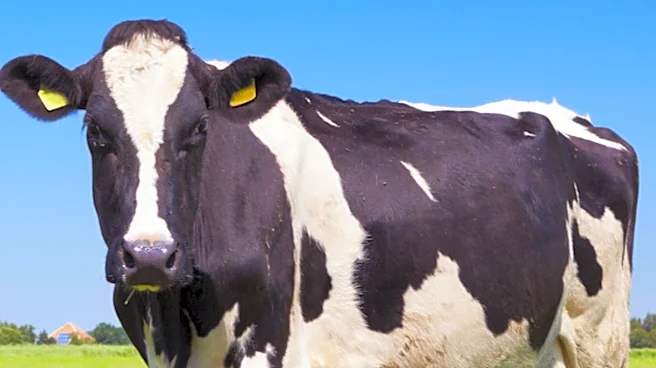
million initiative aims to create treatments that can be rapidly deployed when infestations are detected. The project involves developing formulations that combine synthetic macrocyclic lactones with botanical synergists, such as neem and eugenol, to effectively kill larvae and disrupt their life cycle. The research is crucial as the New World screwworm poses a significant threat to livestock, with recent cases reported in Texas and New Mexico.
Why It's Important?
The New World screwworm is a devastating parasite that can cause severe damage to livestock, leading to significant economic losses. The development of effective wound treatments is vital for protecting the U.S. livestock industry from potential outbreaks. The project not only addresses an immediate biosecurity threat but also strengthens the resilience of U.S. agriculture by providing ranchers and veterinarians with practical solutions. By minimizing chemical residues and offering rapid treatment options, the research supports sustainable livestock management and enhances the overall health and safety of animals.
What's Next?
The research team will continue to test the efficacy of the new treatments and assess their potential for national deployment. The project aims to establish a regulatory pathway for these treatments, ensuring they meet quality-control specifications and are ready for emergency response. As the research progresses, it may lead to broader applications and collaborations with the USDA and other stakeholders to enhance biosecurity measures. The success of this initiative could pave the way for further innovations in livestock health management, potentially influencing policy decisions and industry practices.