

What's Happening?
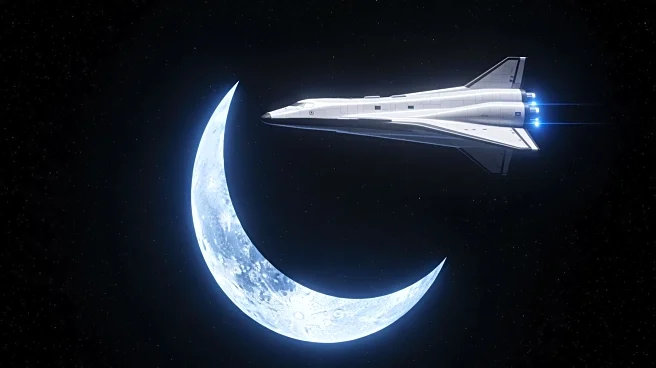
A Russian cargo spacecraft, Progress 94, encountered a technical issue during its mission to the International Space Station (ISS). Launched from the Baikonur Cosmodrome on March 22, the spacecraft was intended to deliver approximately three metric tons
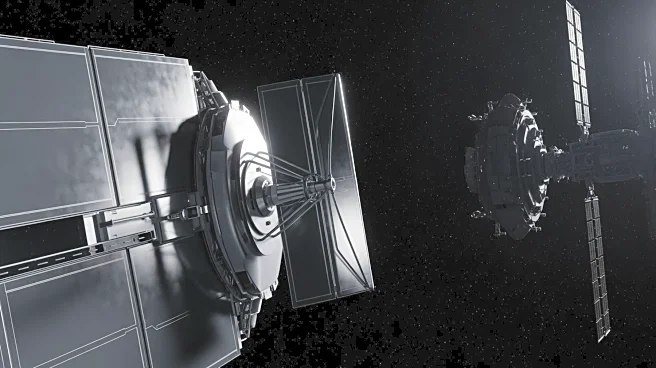
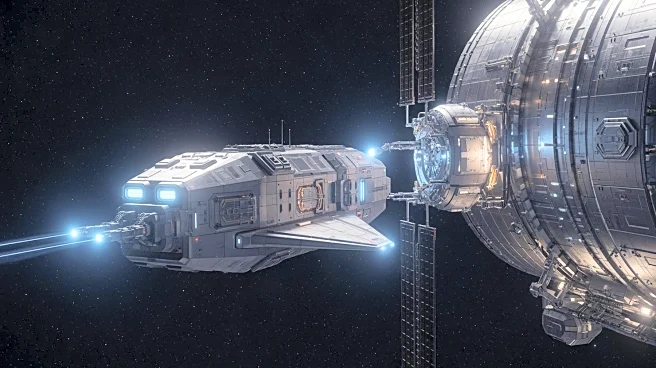
of supplies to the ISS. However, one of its two KURS antennas, crucial for automated docking, failed to deploy after separation from the Soyuz rocket. Despite this setback, Roscosmos cosmonaut Sergey Kud-Sverchkov successfully executed a manual docking using the TORU system, allowing the spacecraft to attach to the ISS's Poisk module on March 24. The mission's success ensures the delivery of essential supplies to the Expedition 74 crew, with plans for the spacecraft to remain docked for six months before being filled with waste for a controlled reentry into Earth's atmosphere.
Why It's Important?
The successful manual docking of Progress 94 underscores the importance of having backup systems and skilled personnel in space missions. This incident highlights the challenges and complexities of space operations, where technical failures can occur despite rigorous planning. The ability to adapt and overcome such issues is crucial for the continued support and operation of the ISS, which relies on regular resupply missions for crew sustenance and scientific research. The event also emphasizes the role of international collaboration in space exploration, as the ISS is a joint project involving multiple countries, including the United States and Russia. The resolution of this issue ensures the uninterrupted functioning of the ISS, which is vital for ongoing scientific experiments and international cooperation in space.
What's Next?
Following the successful docking, Progress 94 will remain attached to the ISS for approximately six months. During this period, the spacecraft will serve as a storage area for waste generated by the ISS crew. Once filled, it will be undocked and sent back towards Earth for a destructive reentry, a standard procedure for disposing of space station waste. This mission's outcome may prompt Roscosmos and other space agencies to review and enhance their contingency plans for future missions, ensuring that similar technical issues can be addressed effectively. Additionally, the incident may lead to further developments in automated docking technology to prevent such failures in future missions.