
What's Happening?
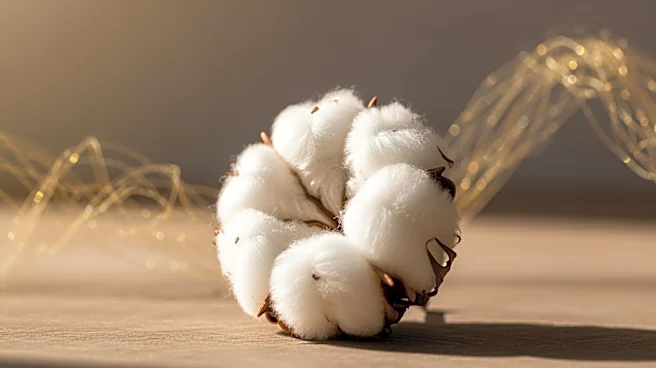
Egyptian cotton, known for its luxury and high quality, is facing new challenges as European brands demand greater traceability due to tightening regulations. The fiber, often referred to as 'white gold,'
is renowned for its extra-long-staple cotton, which accounts for about 1% of global cotton production. However, recent regulatory changes in Europe, such as France's Life Cycle Assessment and the EU's Corporate Sustainability Reporting Directive, are pushing brands to ensure clearer proof of fiber origins and processing methods. This comes after past controversies, including a scandal where sheets marketed as 100% Egyptian cotton were found to contain cheaper substitutes. The Egyptian government is implementing a textile-revival strategy with a 2030 deadline to restore the cotton's reputation and market position.
Why It's Important?
The demand for transparency in the supply chain is crucial for maintaining the reputation of Egyptian cotton in the global market. As European brands look for nearshore manufacturing options, Egypt's ability to comply with new regulations could determine its competitiveness against other high-quality cotton producers like Peru and India. The success of Egypt's textile-revival strategy could significantly impact the country's economy and its position in the luxury textile market. Failure to adapt could lead to a loss of market share and trust, affecting both local farmers and international brands relying on Egyptian cotton.
What's Next?
Egypt's government-backed strategy aims to enhance the cotton industry's transparency and sustainability by 2030. This involves improving oversight and building direct relationships with farmers to ensure compliance with international standards. As European regulations continue to evolve, Egyptian cotton producers must adapt quickly to maintain their market position. The outcome of these efforts will likely influence the global perception of Egyptian cotton and its role in the luxury textile industry.