
What's Happening?
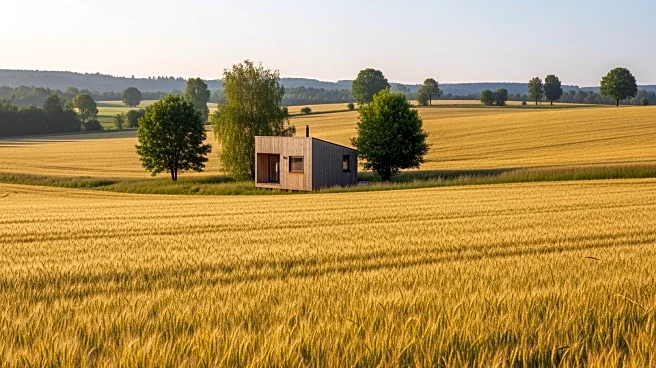
In Turkey, the popularity of tiny houses has surged, driven by a desire for minimalist living and the rising costs of traditional housing. These portable homes, often placed on agricultural lands, have
become a significant market, with approximately 10,000 to 12,000 units produced to date. However, the trend has sparked concerns about the impact on agricultural lands and food security. Experts warn that the placement of tiny houses on farmland could lead to a food crisis, as these lands are diverted from crop production. The sector remains largely unregulated, with many tiny houses being placed in areas where construction is typically prohibited. This has led to a rise in farmland prices, particularly in regions like Bodrum and Milas, where agricultural lands are being sold for tiny house placement.
Why It's Important?
The expansion of tiny houses on agricultural lands poses significant risks to Turkey's food security and environmental sustainability. As agricultural lands are converted for residential use, the country's ability to produce essential crops like wheat and sunflowers is threatened. This shift could exacerbate existing challenges posed by climate change and drought, leading to a potential agricultural and environmental catastrophe. The unregulated nature of the tiny house market further complicates efforts to manage land use effectively. Additionally, the trend highlights broader issues of urban planning and the need for sustainable housing solutions that do not compromise food production or environmental health.
What's Next?
To address these challenges, there is a need for clearer regulations and oversight of the tiny house market. Integrating tiny house areas into urban and regional planning could help manage their impact on agricultural lands. Legal reforms may be necessary to ensure that these structures are placed in appropriate locations and that their environmental impact is minimized. Stakeholders, including government agencies, environmental groups, and the agricultural sector, will need to collaborate to develop sustainable solutions that balance housing needs with food security and environmental protection.
Beyond the Headlines
The tiny house trend in Turkey also raises questions about the definition of 'eco-friendly' living. While marketed as sustainable, the environmental impact of tiny houses depends on various factors, including their water and energy sources and waste management systems. As the number of tiny houses increases, ensuring compliance with environmental standards becomes more challenging. This situation underscores the importance of comprehensive environmental assessments and the development of infrastructure to support sustainable living practices.