




What's Happening?
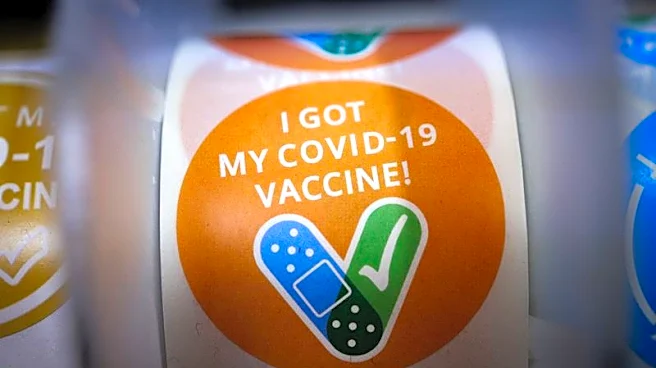
President Trump announced plans to recommend that certain routine childhood immunizations be divided into five separate shots, each containing a 'small amount of the vaccine.' These '20% doses' would be administered at six-month intervals. He suggested
that this revised federal vaccination schedule would lead to a 'massive reduction in autism,' despite extensive scientific studies showing no connection between vaccines and autism. President Trump specifically mentioned the polio vaccine as one that has 'been amazing.' This proposal follows an earlier attempt by his administration to overhaul the federal childhood vaccine schedule, which was temporarily blocked by a federal judge. The U.S. Department of Health and Human Services has not yet provided further details on these proposed changes. Dr. Paul Offit, director of the Vaccine Education Center at the Children’s Hospital of Philadelphia, criticized the plan, stating that such a schedule would render vaccines ineffective and would not enhance their safety.
Why It's Important?
This proposal by President Trump carries significant implications for public health and vaccine policy in the U.S. If implemented, altering the established childhood immunization schedule could lead to a decrease in vaccine efficacy, potentially increasing the incidence of preventable diseases. The current vaccine schedule is based on extensive scientific research to ensure optimal immune response and protection. Diluting doses and extending intervals, as suggested, could leave children vulnerable to serious illnesses for longer periods and might not provide adequate immunity. Furthermore, the President's assertion linking vaccine schedule changes to a reduction in autism contradicts decades of scientific consensus, which could erode public trust in established medical science and vaccination programs. This could exacerbate vaccine hesitancy, making it harder to achieve herd immunity and protect the most vulnerable populations. The potential for a resurgence of diseases like polio, measles, and mumps, which are currently well-controlled due to high vaccination rates, poses a substantial public health risk.
What's Next?
The U.S. Department of Health and Human Services is expected to provide further details on President Trump's proposed changes to the childhood immunization schedule. Medical and public health organizations, including the American Academy of Pediatrics and the American Academy of Family Physicians, are likely to continue to advocate for evidence-based vaccination practices and may issue formal responses or guidance. The scientific community will likely reiterate the importance of the current vaccine schedule, which is designed for maximum efficacy and safety. Any official attempt to implement these changes would likely face legal challenges, similar to the previous attempt to overhaul the federal childhood vaccine schedule. Public discourse on vaccine safety and efficacy is also expected to intensify, with advocacy groups on both sides weighing in. Healthcare providers will need to navigate potential confusion among parents regarding vaccination recommendations.
Beyond the Headlines
The discussion surrounding President Trump's vaccine proposal extends beyond immediate public health concerns, touching upon the broader implications of political influence on scientific policy. The repeated questioning of established medical science, particularly regarding vaccine safety and efficacy, can have long-term societal consequences. It can foster an environment where misinformation thrives, making it challenging for the public to distinguish between scientifically validated information and unsubstantiated claims. This erosion of trust in scientific institutions can impact not only vaccination rates but also public response to future health crises. The ethical dimension of potentially altering a proven public health strategy based on unscientific claims is also a critical consideration. This situation highlights the ongoing tension between political rhetoric and evidence-based public health practices, underscoring the importance of clear, consistent communication from health authorities to maintain public confidence and safeguard community well-being.