








What's Happening?
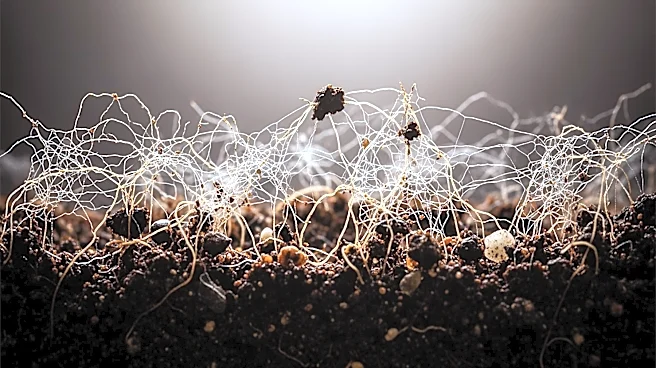
Scientists have created the first global map of mycorrhizal fungi, a vast network of microscopic filaments that attach to plant roots and facilitate the exchange of nutrients. According to ecologist Justin Stewart, these fungi have been in symbiotic relationships
with plants for approximately 450 million years, trading nutrients like nitrogen and phosphorus for carbon produced by photosynthesis. This carbon is then transported deep underground. The research, conducted by the Society for the Protection of Underground Networks, utilized soil samples, satellite data, and artificial intelligence to identify areas where these fungal networks are most dense, such as wetlands like the Everglades, and where they are sparse, such as deserts like the Sahara. The study highlights the significant presence of these networks under grasslands, which are often overlooked in conservation efforts compared to forests.
Why It's Important?
The mapping of mycorrhizal fungi networks is crucial for understanding and protecting these vital ecological systems. These fungi play a significant role in carbon sequestration, which is essential for mitigating climate change. By transporting carbon deep into the soil, they help reduce atmospheric carbon levels. The research underscores the importance of conserving grasslands, which have been identified as having particularly dense fungal networks. This could shift conservation priorities and strategies, emphasizing the need to protect these less-studied ecosystems. The findings also provide a foundation for further research into how these networks can be leveraged to enhance soil health and agricultural productivity, potentially benefiting farmers and the agricultural industry.
What's Next?
Future research will likely focus on understanding the specific roles these fungal networks play in different ecosystems and how they can be protected and utilized. Conservationists may advocate for policies that prioritize the protection of grasslands and other areas with dense fungal networks. Additionally, there may be increased interest in exploring how these networks can be integrated into sustainable agricultural practices to improve soil health and crop yields. As awareness of the importance of these networks grows, there could be more funding and resources allocated to studying and preserving them.
Beyond the Headlines
The discovery of these extensive fungal networks highlights the complexity and interconnectedness of ecosystems. It raises questions about the ethical responsibility to protect these unseen but crucial components of the natural world. The research also suggests a need to rethink traditional conservation approaches that focus primarily on visible and charismatic ecosystems like forests. By recognizing the importance of underground networks, there may be a shift towards more holistic conservation strategies that consider the entire ecosystem, including its hidden components.