
What's Happening?
An international team of scientists, led by the University of Portsmouth, has conducted a comprehensive study on 'surging glaciers,' which are glaciers that can suddenly accelerate and pose significant
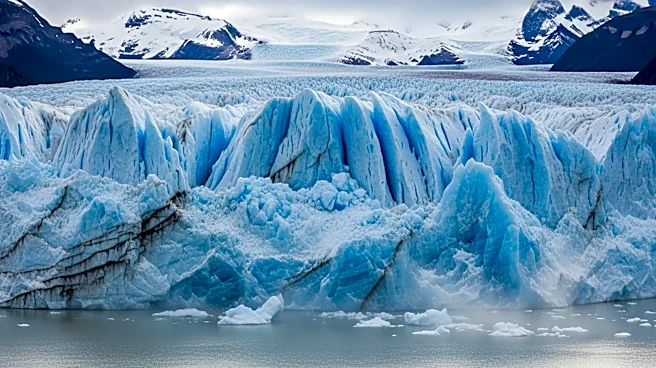
risks such as floods and avalanches. The study, published in Nature Reviews Earth and Environment, identifies over 3,100 glaciers worldwide that have experienced surges, with concentrations in the Arctic, High Mountain Asia, and the Andes. These glaciers, while only 1% of the total, affect nearly one-fifth of the global glacier area. The research highlights the dangers these glaciers pose, including glacier advance, river blockages, and sudden detachments that can lead to avalanches. The study also notes that climate change is increasing the unpredictability of these surges, making them harder to forecast.
Why It's Important?
The findings underscore the growing threat of natural disasters linked to climate change, particularly in regions with surging glaciers. These glaciers can cause catastrophic events that threaten thousands of lives and infrastructure. The unpredictability of surges due to climate change complicates efforts to protect vulnerable communities. The study emphasizes the need for improved monitoring and forecasting to mitigate risks. As climate change continues to alter weather patterns, understanding and predicting glacier behavior becomes crucial for disaster preparedness and response strategies.
What's Next?
The study calls for enhanced satellite monitoring, field observations, and modeling to better predict glacier surges. Scientists stress the importance of identifying glaciers that pose the greatest risks to prioritize monitoring efforts. As climate change progresses, the behavior of surging glaciers may change, necessitating ongoing research and adaptation of strategies to protect at-risk communities. The study highlights the need for international collaboration in research and resource allocation to address the challenges posed by these glaciers.