


What's Happening?
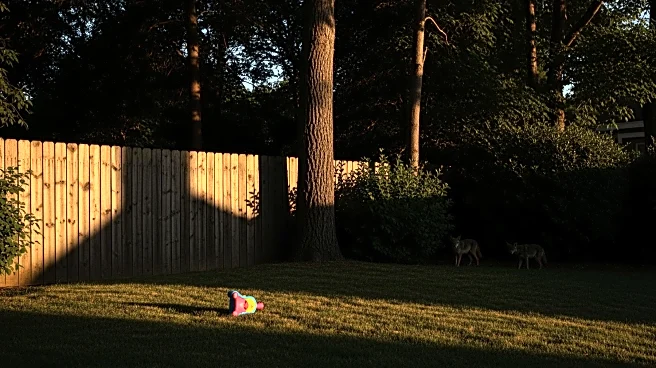
A surveillance video from a Pasadena home captured a close encounter between a large coyote and a 3-year-old boy named Salvo Bessemer. The incident occurred on a Monday afternoon when Salvo was heading towards the family car and suddenly turned back,
running and screaming for his mother, Aida Svelto. The video shows the coyote following Salvo through the front gate. Aida, upon realizing the situation, quickly grabbed her son and screamed, causing the coyote to retreat. This event highlights the increasing presence of coyotes in suburban areas like Pasadena, especially during their mating season from January to March. The Los Angeles County Department of Agricultural Commissioner notes that during this period, coyotes are more active and bold as they search for mates and food. The proximity of human habitats to natural coyote territories has led to more frequent sightings and interactions.
Why It's Important?
The incident underscores the growing challenge of human-wildlife interactions in urban and suburban settings. As cities expand into natural habitats, encounters with wildlife such as coyotes become more common, posing potential safety risks to residents. This situation is exacerbated during mating seasons when animals are more active. The presence of coyotes in residential areas can lead to increased anxiety among residents, particularly parents of young children. It also raises questions about urban planning and wildlife management strategies. Effective measures are needed to ensure the safety of both humans and wildlife, such as public education on how to handle encounters and the implementation of non-lethal deterrents.
What's Next?
Residents in areas with high coyote activity may need to adopt preventive measures, such as securing trash bins and supervising children and pets outdoors. Local authorities might consider increasing public awareness campaigns to educate communities on coexisting with wildlife. Additionally, there could be discussions on urban planning policies that better accommodate wildlife corridors to reduce such encounters. Monitoring and research into coyote behavior in urban settings could also inform future strategies to manage these interactions safely.