



What's Happening?
US Central Command (CENTCOM) has established a new task force, named Task Force Iron Gate, to disrupt Iran’s use of land routes and the Caspian Sea for transporting advanced weapons, sanctioned materials, and other restricted goods. This initiative, directed
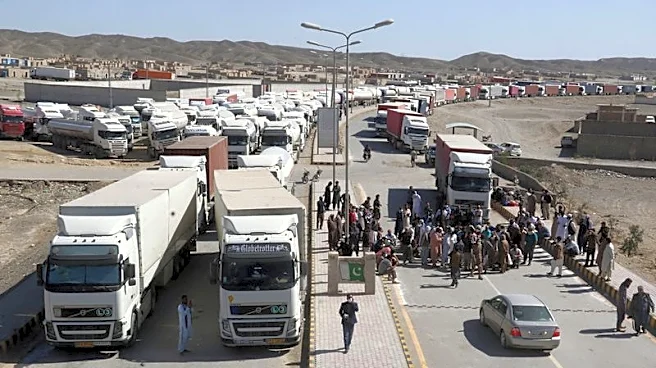
by CENTCOM Commander Adm. Brad Cooper and established on November 7, expands Washington’s efforts to restrict Tehran’s military supply networks and revenue sources beyond the maritime domain. The unit, comprising approximately 20 civilian and military personnel based in Tampa, Florida, will coordinate with other US government agencies. Its focus includes preventing the movement of advanced weapons systems, dual-use technologies, sanctioned materials, and illicit revenue streams across Iran’s land borders and the Caspian Sea. This move aims to close potential gaps in the US campaign against Iran, as overland and alternative maritime routes have become more critical for Tehran due to the existing US naval blockade.
Why It's Important?
The establishment of Task Force Iron Gate signifies a significant escalation in the US strategy to pressure Iran, moving beyond maritime interdictions to encompass land and Caspian Sea routes. This expansion aims to further cripple Iran's ability to finance terrorism, rebuild weapons factories, and replenish its military capabilities, directly impacting its regional influence and strategic posture. The existing naval blockade has already prevented Iran from exporting over $25 billion worth of crude oil, demonstrating the economic impact of such measures. By targeting alternative supply routes, the US seeks to intensify economic and military pressure, potentially exacerbating tensions in an already volatile region. This could have far-reaching implications for global trade, energy security, and the broader geopolitical landscape, affecting industries reliant on stable supply chains and regional stability.
What's Next?
Task Force Iron Gate will immediately begin coordinating with other US government agencies to implement its mission, focusing on intelligence gathering and interdiction efforts across Iran's land borders and the Caspian Sea. This will likely lead to increased scrutiny and potential disruptions of goods moving through these routes. The move comes amidst heightened tensions and ongoing diplomatic efforts, with Qatar mediating proposals between the US and Iran. The effectiveness of this new task force will be crucial in determining the future trajectory of the US-Iran standoff, potentially influencing Iran's willingness to engage in substantive negotiations. However, it also carries the risk of further escalating military and economic confrontations, as Iran has previously stated its military capabilities have strengthened despite the conflict.
Beyond the Headlines
The creation of Task Force Iron Gate underscores the evolving nature of modern geopolitical conflicts, where economic warfare and supply chain disruption are as critical as direct military engagement. By targeting Iran's alternative supply routes, the US is employing a comprehensive strategy to isolate and weaken the Iranian regime, reflecting a long-term commitment to containing its influence. This approach also highlights the strategic importance of regions like the Caspian Sea, which are becoming new fronts in international power struggles. The broader implications include potential shifts in regional alliances and trade patterns, as countries adapt to increased enforcement measures. Furthermore, the move could intensify the debate over international law and sovereignty concerning interdiction efforts in non-traditional maritime and land corridors, setting precedents for future international disputes.