



What's Happening?
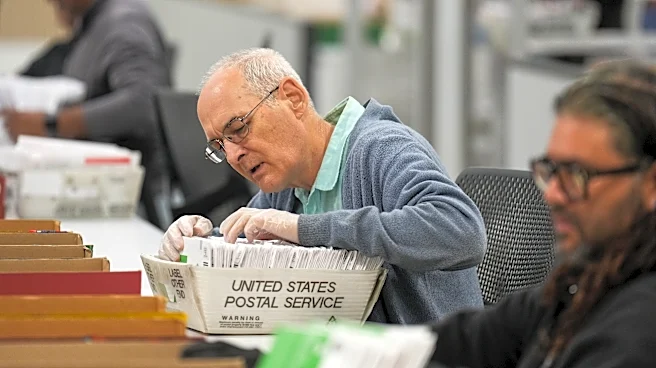
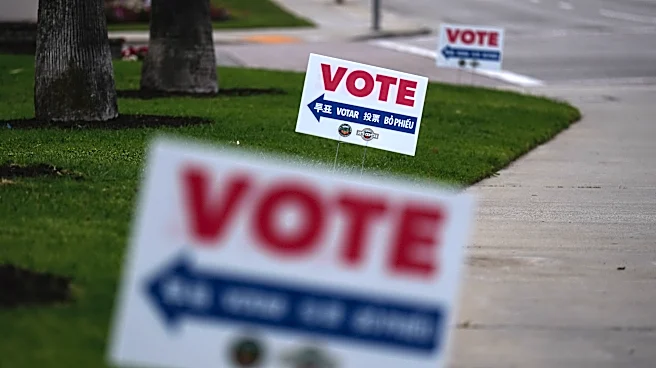
California's vote counting process has come under scrutiny following accusations from President Trump and others of election rigging due to its slow pace. The state's system, designed to ensure accuracy and prevent fraud, involves multiple verification
steps, including electronic and human signature checks on mail-in ballots. Voters are given 22 days to correct errors on their ballots, contributing to the delay. Despite the slow process, experts argue that the system is effective in maintaining election integrity. The slow count has been a point of contention, particularly in competitive elections with national implications, where misinformation can spread rapidly.
Why It's Important?
The slow vote counting in California highlights the tension between ensuring election integrity and the public's desire for quick results. In an era where misinformation can quickly gain traction, the delay can erode public trust in the electoral process. However, the system's thoroughness is crucial in preventing fraud and ensuring every vote is counted. The situation underscores the challenges faced by election officials in balancing speed and accuracy, especially in a politically polarized environment. The outcome of these elections can have significant implications for national politics, making the integrity of the process even more critical.
What's Next?
California may consider reforms to expedite the vote counting process without compromising accuracy. Potential changes include reducing the time allowed for voters to correct ballot errors and increasing resources for election staff and equipment. These adjustments could help speed up the process while maintaining voter confidence. However, the state is likely to remain a target for fraud allegations due to its significant role in national elections. Efforts to combat misinformation and improve public understanding of the vote counting process will be essential in preserving trust in the electoral system.