






What's Happening?
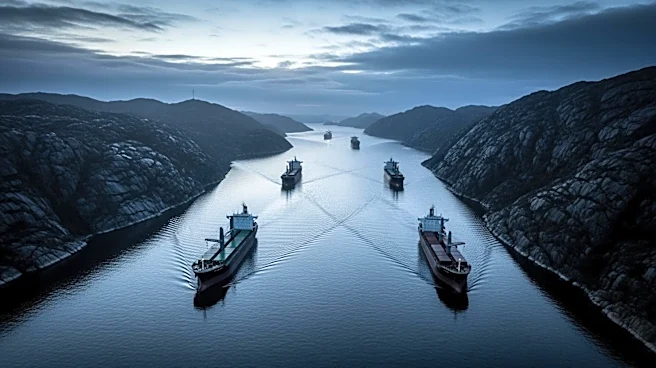
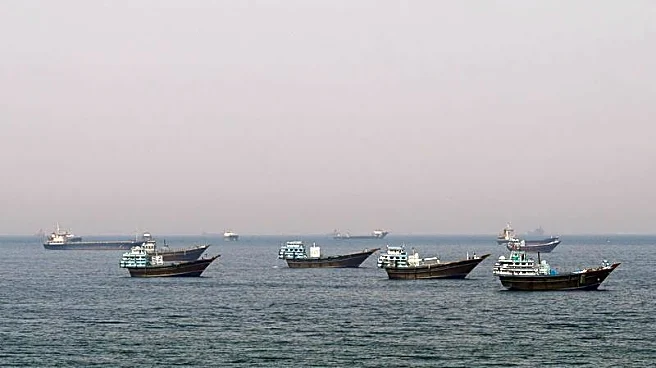
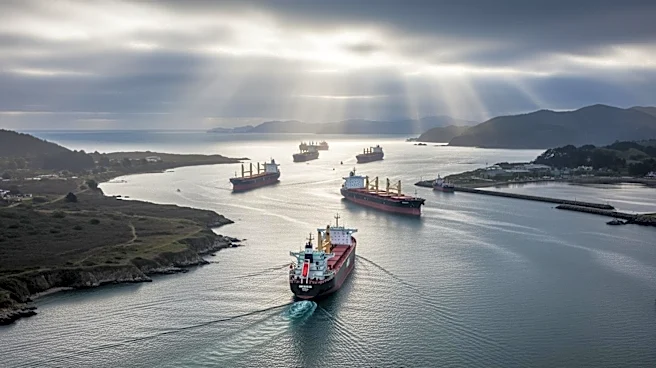
Shipping traffic through the Strait of Hormuz remains mostly halted, with only a few ships passing through in recent days. The halt is due to a US blockade of Iranian ports, which has led Iran to impose its own restrictions on the strait. The situation
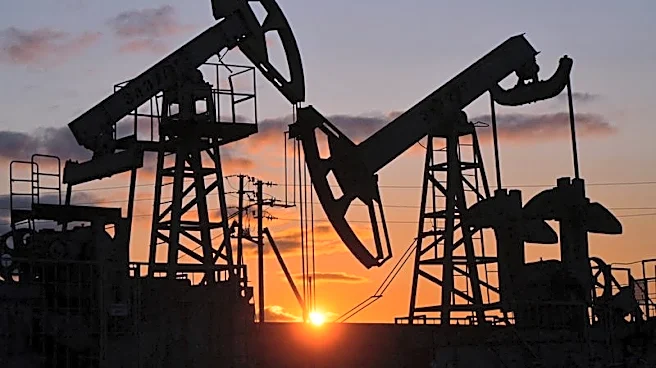
has left hundreds of ships and thousands of seafarers stranded, unable to navigate the critical waterway. The strait typically handles a significant portion of the world's oil and gas supply, and its closure has raised concerns about global energy security.
Why It's Important?
The Strait of Hormuz is a vital artery for global energy supplies, and its closure can have far-reaching economic impacts. The ongoing blockade and restrictions highlight the geopolitical tensions between the US and Iran, with potential consequences for international trade and energy markets. The situation underscores the need for diplomatic solutions to ensure the free flow of goods and resources through the strait. Stakeholders in the shipping and energy sectors are closely monitoring developments, as prolonged disruptions could lead to increased prices and supply chain challenges.
What's Next?
Military planners from over 30 countries are set to meet in London to discuss reopening the Strait of Hormuz and ensuring safe passage for ships. The talks aim to develop a joint plan to safeguard navigation and support a lasting ceasefire. The outcome of these discussions could influence future diplomatic and military strategies in the region, with potential implications for international relations and energy security.