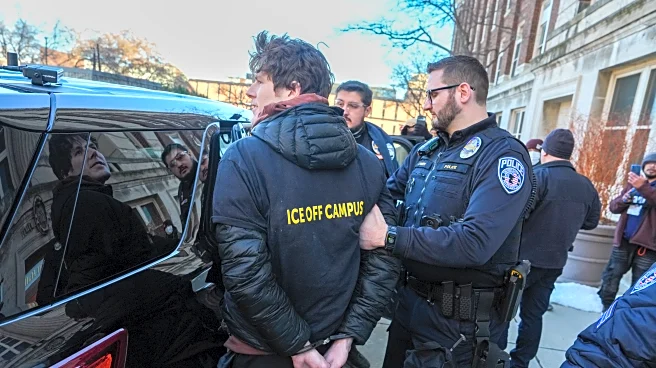




What's Happening?
As immigration enforcement intensifies under the Trump administration, there is growing concern and confusion about the rights of individuals when interacting with immigration agents. According to a recent Q&A, immigration agents do not need a warrant
to detain someone in public but require one to search private property. Most immigration arrests are conducted using administrative warrants, which do not permit entry into private homes without consent. The Fourth Amendment protects individuals from unreasonable searches and seizures, allowing people to refuse entry to agents with only administrative warrants. The American Civil Liberties Union (ACLU) advises individuals to ask agents to explain their basis for reasonable suspicion if detained. This information comes amidst heightened fears and protests against U.S. Immigration and Customs Enforcement (ICE) actions, including a recent incident where an ICE agent shot and killed a woman in Minneapolis.
Why It's Important?
The clarification of rights is crucial as immigration enforcement actions become more visible and contentious across the U.S. Understanding the legal boundaries of immigration agents' authority can empower individuals and communities to protect their rights. This is particularly significant in areas with high immigrant populations, where fear of deportation and family separation is prevalent. The information also highlights the ongoing debate over the balance between national security and civil liberties, a topic that continues to polarize public opinion and influence policy decisions. The ACLU's guidance serves as a critical resource for those navigating interactions with immigration authorities, potentially impacting public trust and cooperation with law enforcement.