

What's Happening?
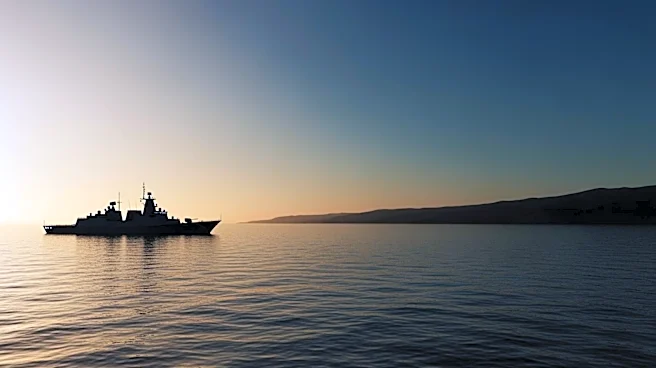
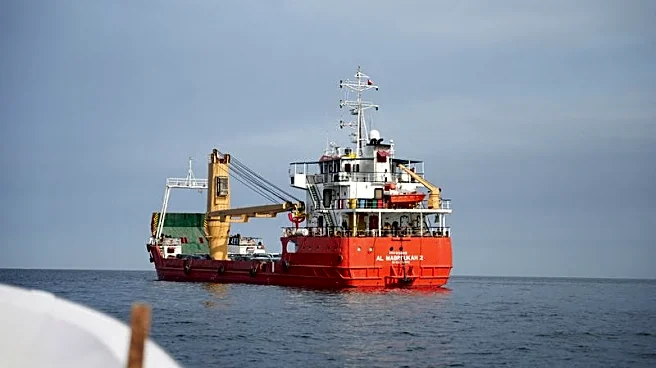
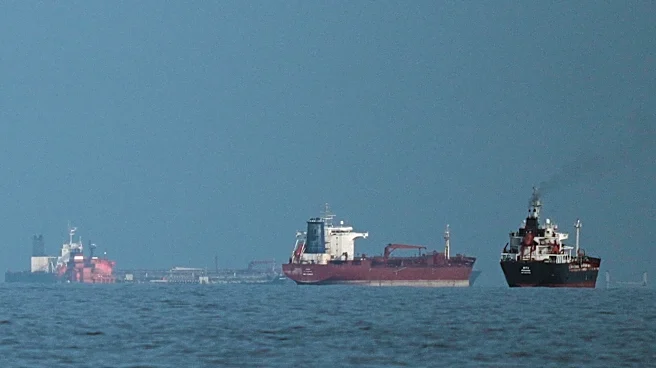
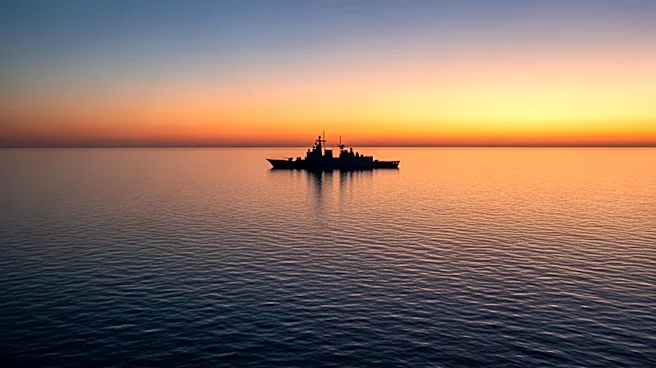
The U.S. military's Central Command has announced the completion of a blockade of Iranian ports in the Strait of Hormuz. This strategic move is part of ongoing tensions between the U.S. and Iran, with the blockade effectively cutting off a crucial maritime
trade route that accounts for about 90% of Iran's economy. The action coincides with President Trump's announcement that talks with Iran might resume soon, amidst broader Middle East negotiations involving Israel and Lebanon. The blockade is seen as an economic pressure tactic by the U.S. to influence Iran's position in these negotiations, particularly concerning the disarmament of Hezbollah, a Lebanese militia backed by Iran.
Why It's Important?
The blockade of Iranian ports is a significant escalation in U.S.-Iran relations, potentially impacting global oil markets and international trade. The Strait of Hormuz is a vital passage for oil shipments, and its closure could lead to increased oil prices and economic instability, particularly affecting countries heavily reliant on oil imports. The move also underscores the U.S.'s strategic use of economic sanctions and blockades as tools of foreign policy. The outcome of the anticipated U.S.-Iran talks could have far-reaching implications for regional stability and international diplomatic relations, especially if it leads to a de-escalation of military tensions in the Middle East.
What's Next?
The next steps involve potential diplomatic negotiations between the U.S. and Iran, which could either ease or exacerbate current tensions. The international community will be closely watching these developments, as any agreement or further conflict could significantly impact global economic and political landscapes. Additionally, the blockade's impact on Iran's economy may pressure Iranian leadership to engage more earnestly in negotiations, potentially leading to a broader peace agreement involving Israel and Hezbollah.