








What's Happening?
The Estonian Police and Border Guard (PPA) has deployed an 11-member team to Latvia to assist in preventing illegal migration and safeguarding the external borders of the European Union. This new rotation, ESTPOL11, replaces a previous team that had been
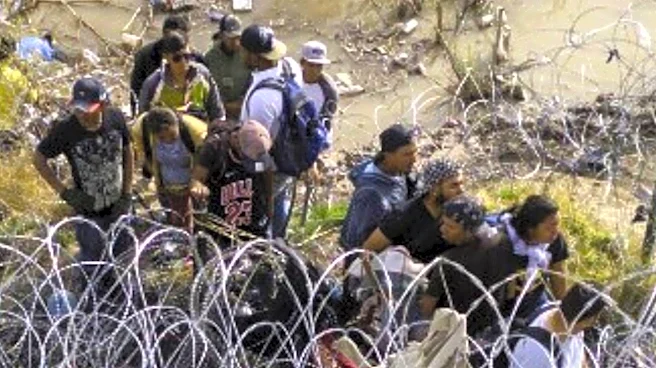
operating in Latvia for two weeks. The deployment is a direct response to the sustained high migration pressure in the region, particularly along the Latvian-Belarusian border. Veiko Kommusaar, deputy director general of the Estonian Police and Border Guard, emphasized that Estonia's objective is to prevent a temporary migration route from becoming permanent. Latvian authorities have reportedly thwarted over 9,000 illegal border-crossing attempts this year. The Estonian team will participate in border patrols in areas most affected by migratory activity, working alongside their Latvian counterparts to prevent illegal crossings, ensure the return of individuals who have entered Estonia illegally, and apprehend human smugglers and their associates.
Why It's Important?
This deployment underscores the ongoing challenges faced by European Union member states in managing external borders and addressing illegal migration. The collaborative effort between Estonia and Latvia highlights the principle of shared responsibility within the EU for border security. The high number of thwarted border-crossing attempts in Latvia indicates a significant and persistent migratory flow, which, if unchecked, could strain resources and create humanitarian concerns. The PPA's stated aim to prevent the establishment of a permanent migration route reflects a broader European strategy to control and regulate migration flows, rather than allowing uncontrolled entry. The involvement of multiple national agencies in border protection also demonstrates the complex, multi-faceted nature of modern border management, requiring coordinated international responses to transnational issues like human smuggling.
What's Next?
The Estonian team will continue its border patrol operations in Latvia for the coming weeks, focusing on areas with the highest migratory pressure. This ongoing support suggests a sustained commitment from Estonia to assist its neighbor in managing border security. The broader European Union is also working on streamlining deportations with a new digital system, indicating a move towards more efficient and coordinated responses to illegal migration across the bloc. Discussions and debates within the EU regarding migration and border protection are expected to continue, with various leaders advocating for stronger measures and enforcement. The effectiveness of these reinforced patrols and the new digital deportation system will be closely monitored as the EU seeks to address the enforcement gap between deportation decisions and actual returns.
Beyond the Headlines
The situation on the Latvian-Belarusian border is indicative of the geopolitical complexities surrounding migration in Europe. The sustained migratory pressure could be influenced by various factors, including political instability in origin countries, economic disparities, and the actions of human smuggling networks. The emphasis on preventing a 'temporary migration route from developing into a permanent one' suggests a proactive approach to avoid the establishment of entrenched pathways for illegal entry, which could have long-term demographic, social, and economic implications for the affected regions. The collaboration between Estonia and Latvia, while addressing immediate border security concerns, also highlights the need for comprehensive, long-term EU-level strategies that tackle the root causes of migration, enhance international cooperation, and ensure humane and orderly processes for those seeking asylum or economic opportunities.