
What's Happening?
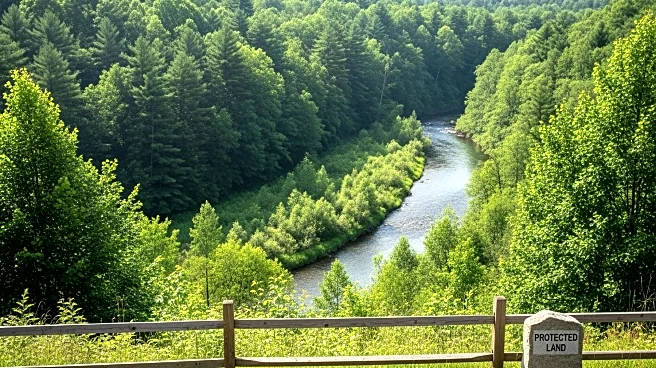
The Conservation Foundation has purchased a 122-acre parcel of land in Dundee Township, Illinois, which was previously considered for warehouse development. The acquisition, finalized in May 2025, was made
public when the foundation erected a 'Land Saved' sign at the site. The land, formerly owned by the Galvin family, founders of Motorola Corp., was initially targeted by a developer for a warehouse and distribution center. However, local opposition, concerned about increased diesel truck traffic and environmental impacts, led to the project's cancellation. The foundation, with the help of a $1.5 million donation and private financing, bought the land for $6 million. Currently, the land is leased to the Forest Preserve District of Kane County, with plans to eventually sell it to the district to expand its open space holdings.
Why It's Important?
This acquisition underscores the growing importance of land conservation in urban and suburban areas, particularly as communities face pressure from industrial development. By preserving this land, the Conservation Foundation is protecting local ecosystems, including mature oak groves and wetlands, and providing potential recreational opportunities for residents. The decision reflects a broader trend of prioritizing environmental sustainability and community well-being over industrial expansion. This move could inspire similar conservation efforts in other regions, highlighting the role of non-profit organizations and community advocacy in shaping land use policies. The preservation of this land also aligns with the Forest Preserve District's mission to expand open spaces, which can enhance quality of life and biodiversity.
What's Next?
The Conservation Foundation plans to hold the land until it can be sold to the Forest Preserve District of Kane County. The district, which recently passed a tax referendum to acquire more open space, is seeking grants to fund the purchase. Future plans may include developing trails and connecting the land to nearby recreational areas, such as the Randall Oaks Recreational Center. This could involve constructing an overpass or underpass to facilitate access. The foundation's successful acquisition may encourage further community-driven conservation initiatives, potentially influencing local government policies on land development and environmental protection.