

What's Happening?
Rhode Island's congressional delegation, including U.S. Representative Seth Magaziner, is seeking answers from federal agencies regarding the denial of $19 million in federal disaster aid following a February 2026 blizzard. The delegation, comprising
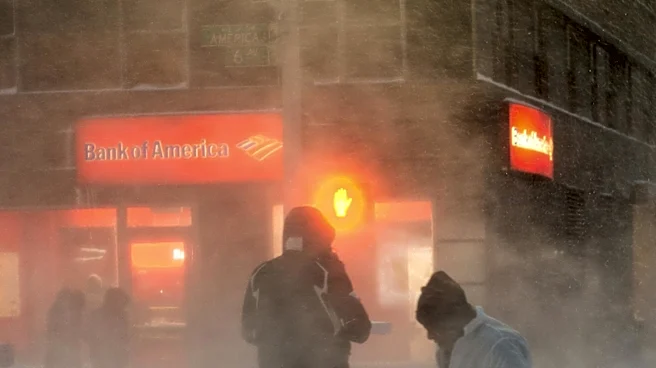
U.S. Senators Jack Reed and Sheldon Whitehouse, and U.S. Representatives Seth Magaziner and Gabe Amo, all Democrats, sent a letter to the U.S. Department of Homeland Security and the Federal Emergency Management Agency (FEMA). They are demanding the preservation of all records and documentation related to Rhode Island's request for a major disaster declaration. The lawmakers allege that the Trump Administration may have denied the aid as political retribution, citing reports that President Trump overrode his own agencies' recommendations to deny disaster requests from four Democratic states. Despite damage estimates exceeding FEMA's thresholds for assistance, the state's request was denied without a detailed written explanation. FEMA Administrator Cameron Hamilton publicly stated that federal disaster aid is not a backstop for routine state and local budgeting, a claim the delegation disputes given the historic nature of the blizzard.
Why It's Important?
This situation highlights potential political interference in federal disaster relief efforts, which could undermine the integrity and impartiality of agencies like FEMA. If disaster aid decisions are influenced by political considerations rather than objective damage assessments, it could leave states vulnerable and disproportionately affect communities based on their political alignment. For Rhode Island, the denial of $19 million in aid means the state and its residents must bear the full financial burden of recovery from a severe weather event that caused widespread power outages, two fatalities, and hundreds of emergency room visits. This could strain state and local budgets, potentially leading to cuts in other essential services or increased taxes. The broader implication is a potential erosion of trust in federal institutions responsible for emergency response and a precedent that could politicize critical aid during times of crisis across the nation.
What's Next?
The Rhode Island congressional delegation expects federal agencies, specifically the Department of Homeland Security and FEMA, to preserve and provide all requested communications and records related to the denial of aid. Their letter explicitly states that failure to provide this information would lead them to assume the administration's claims are without merit. This could lead to further congressional inquiries, potential investigations, or public hearings to ascertain the reasons behind the denial. Depending on the information disclosed, there could be calls for legislative action to safeguard the disaster relief process from political influence. The issue may also become a point of contention in future political campaigns, particularly as the 2026 election cycle progresses, with implications for how federal disaster response is perceived and managed.
Beyond the Headlines
The controversy surrounding Rhode Island's denied disaster aid touches upon deeper issues of federalism and the balance of power between the executive branch and states, especially when political differences are at play. It raises ethical questions about the equitable distribution of federal resources and whether a president's discretionary power should extend to overriding agency recommendations for disaster relief based on political considerations. Such actions could set a dangerous precedent, potentially weaponizing federal aid and creating a system where states are incentivized to align politically with the administration in power to secure necessary assistance. This could lead to long-term shifts in how states approach disaster preparedness and recovery, potentially fostering greater self-reliance or seeking alternative funding mechanisms if federal aid becomes unreliable or politicized.