








What's Happening?
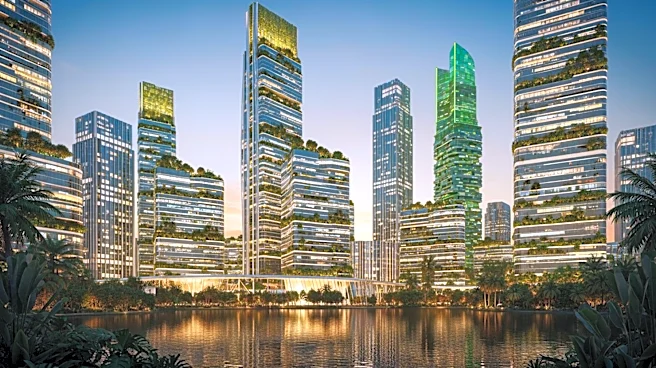
Equatorial Guinea is developing Ciudad de La Paz, its newly announced capital city, as part of a strategic plan for sustainable growth. Located near the borders of Gabon and Cameroon, the city symbolizes a shift from the island of Bioko, where the previous
capital, Malabo, was situated. The government is investing in infrastructure and education, with institutions like the Afro-American University of Central Africa (AAUCA) playing a key role in training the next generation of professionals. The city is designed to be low-density, with ample green spaces and architecture that harmonizes with the natural environment.
Why It's Important?
The development of Ciudad de La Paz reflects Equatorial Guinea's commitment to diversifying its economy and improving its investment climate. By focusing on sustainable urban planning and education, the country aims to attract international investors and foster economic growth. The city's emphasis on green spaces and low-density living aligns with global trends towards sustainable development and environmental conservation. This initiative could position Equatorial Guinea as a leader in sustainable urban planning in Africa, enhancing its reputation and attracting further investment.
What's Next?
As Ciudad de La Paz continues to develop, Equatorial Guinea will likely focus on expanding its infrastructure and educational opportunities to support its growing population. The government may seek partnerships with international organizations to further enhance the city's development and attract foreign investment. The success of this initiative could lead to similar projects in other regions, promoting sustainable urban planning across the continent. Additionally, the city's growth may encourage the return of expatriates and contribute to a more dynamic and diverse economy.
Beyond the Headlines
The development of Ciudad de La Paz highlights the potential for urban planning to drive economic and social change. By prioritizing sustainability and education, Equatorial Guinea is addressing key challenges such as youth unemployment and environmental degradation. The city's growth may also influence cultural and social dynamics, fostering a sense of community and national pride. This initiative underscores the importance of strategic planning in achieving long-term development goals and improving quality of life for citizens.