








What's Happening?
MIT Professor Eric So, from the Sloan School of Management, has released a new book titled 'The Collision: What AI Does to Us,' which explores the potential negative impacts of widespread AI use on human thinking skills. So argues that heavy reliance
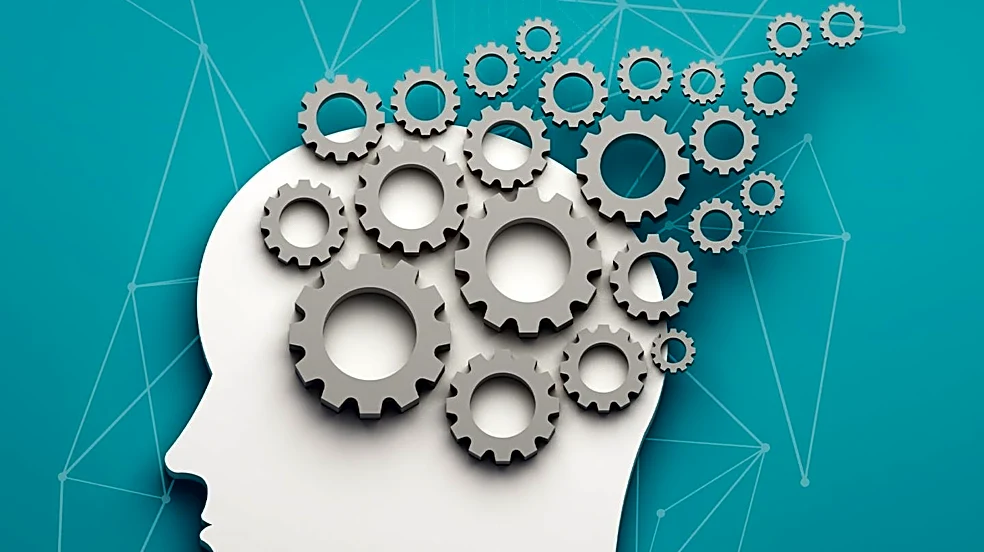
on AI can lead to 'cognitive atrophy,' where individuals fail to develop and retain essential cognitive abilities. His research, drawing from academic and industry studies, including those from AI firms like Anthropic, indicates that many users, particularly college students, engage in low-effort queries for simple answers rather than grappling with complex problems. Professor So highlights a personal experience where he instinctively used AI to complete a professional task, leading to concern about outsourcing his own thinking. He observes a similar trend among students who use AI for homework, thereby missing opportunities to build foundational mastery in subjects. So emphasizes that human learning improves significantly through struggle, iteration, and overcoming initial failures, processes that AI often bypasses.
Why It's Important?
Professor So's insights are crucial for understanding the long-term societal and individual consequences of increasing AI integration. The concept of 'cognitive atrophy' suggests a potential decline in critical thinking, problem-solving, and memory skills across the population, which could have profound implications for education, workforce development, and innovation. If individuals become overly dependent on AI for cognitive tasks, it could hinder their ability to engage in complex reasoning, adapt to new challenges, and foster creativity. This shift could impact U.S. industries by creating a workforce less adept at independent thought and deep analysis, potentially reducing overall productivity and innovation capacity. Furthermore, the 'AI gravity' phenomenon described by So—where biological instincts for mental energy conservation and social pressures to use AI converge—underscores a systemic challenge that individual willpower alone may not overcome, necessitating broader societal and organizational strategies to mitigate these effects.
What's Next?
Professor So proposes several principles for individuals to navigate the age of AI and maintain cognitive effort. These include embracing 'productive struggle' as a formative process, valuing one's capabilities without AI, reinvesting cognitive surplus from AI-automated tasks into skill development or personal growth, and using AI as a 'cognitive trainer' or tutor rather than merely an answer machine. These recommendations suggest a future where educational institutions and workplaces might need to re-evaluate their approaches to AI integration, focusing on methods that augment human capabilities rather than replace them. There could be a push for curricula designed to foster critical thinking alongside AI literacy, and for corporate policies that encourage employees to engage in 'productive struggle' rather than solely optimizing for efficiency through AI. The discussion around AI's impact on cognition is likely to intensify, prompting further research into best practices for human-AI collaboration that preserves and enhances human intellectual faculties.
Beyond the Headlines
The deeper implications of Professor So's work extend to fundamental questions about human identity and the nature of intelligence in an AI-dominated world. If AI alters 'who we are as thinkers,' it challenges traditional notions of human intellectual development and the value placed on cognitive effort. The 'frictionless environment' provided by AI, where models are sycophantic and persuasive, could also impact interpersonal relationships by reducing exposure to differing viewpoints and the necessity of nuanced communication. This raises ethical concerns about the potential for AI to foster intellectual complacency and diminish the capacity for empathy and critical discourse. Culturally, there may be a need for a societal re-evaluation of 'struggle' as a positive, formative experience, akin to the reframing of physical exercise post-industrialization. This shift would require a conscious effort to promote cognitive resilience and intellectual curiosity, ensuring that technological advancement does not inadvertently lead to a decline in human intellectual vitality.