


What's Happening?
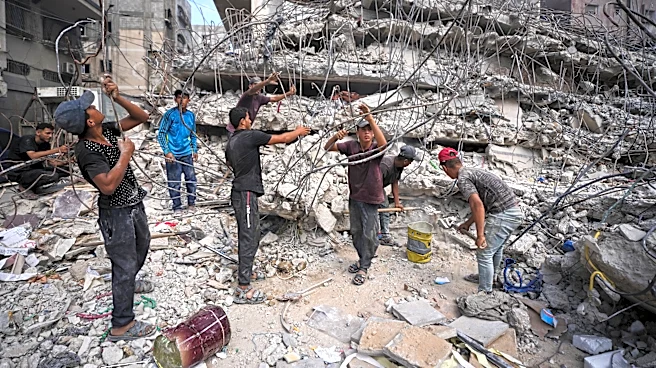
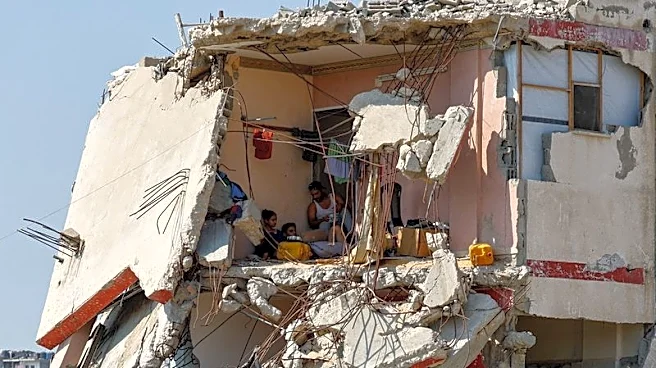
Israeli National Security Minister Itamar Ben-Gvir has publicly stated his advocacy for the killing of "30 to 40" people in Gaza every night. This controversial remark was made during his appearance on the podcast 'The 8 October,' hosted by Rom Braslavski,
a survivor and former hostage of the October 7, 2023 Nova Music Festival attack. Ben-Gvir criticized the recent reduction in Israeli strikes on Gaza and expressed disagreement with Prime Minister Benjamin Netanyahu's approach. He articulated a view that targeted assassinations should be carried out, extending beyond those who pose an immediate threat, stating that some individuals in Gaza are "not worthy of life." This statement comes amidst heightened tensions and ongoing conflict in the region, following the 2023 Hamas attack that resulted in approximately 1,200 deaths and 251 hostages.
Why It's Important?
Minister Ben-Gvir's statements are highly significant due to their extreme nature and the potential implications for international law, human rights, and regional stability. As a key figure in the Israeli government, holding substantial control over the country's security apparatus, prisons, and national police force, his words carry considerable weight and could influence policy and military actions. Such rhetoric risks escalating the conflict, further alienating international allies, and potentially inciting more violence. It also raises serious concerns about the treatment of Palestinians, particularly given his past actions, such as boasting about lessening food rations for Palestinian prisoners and a 2025 ruling by Israel's top court that his prison service was depriving Palestinians of a minimum subsistence diet. The lack of significant mention of his statement in Israeli domestic media, as noted in the source, also highlights potential issues with public discourse and accountability within the country.
What's Next?
The international community will likely react strongly to Minister Ben-Gvir's comments, potentially leading to increased diplomatic pressure on Israel. Human rights organizations and international bodies may condemn the remarks and call for investigations into potential violations of international law. Domestically, while his popularity has risen among some Israelis since the 2023 Hamas attack, his statements could also deepen internal divisions and draw criticism from more moderate political factions. The Israeli government, particularly Prime Minister Netanyahu, may face pressure to either distance itself from Ben-Gvir's extreme views or to clarify its official stance on military operations in Gaza. The ongoing conflict and any future military actions will be scrutinized more closely in light of these statements, with potential implications for international aid, sanctions, and diplomatic relations.
Beyond the Headlines
Minister Ben-Gvir's advocacy for such extreme measures reflects a deeper, more radical shift within certain segments of Israeli politics, moving from the far-right fringe to positions of significant influence. This trend has profound implications for the future of the Israeli-Palestinian conflict and the prospects for peace. His views, which include advocating for the mass emigration of Palestinians from Gaza and the resettlement of Gaza by Israel—proposals that international lawyers suggest could amount to ethnic cleansing—challenge established international norms and could lead to further isolation of Israel on the global stage. The normalization of such rhetoric, even if not fully adopted as policy, can desensitize public opinion to violence and dehumanization, making it harder to achieve any form of reconciliation or lasting resolution. This situation underscores the critical need for robust international engagement and adherence to humanitarian principles to prevent further escalation and protect civilian populations.