



What's Happening?
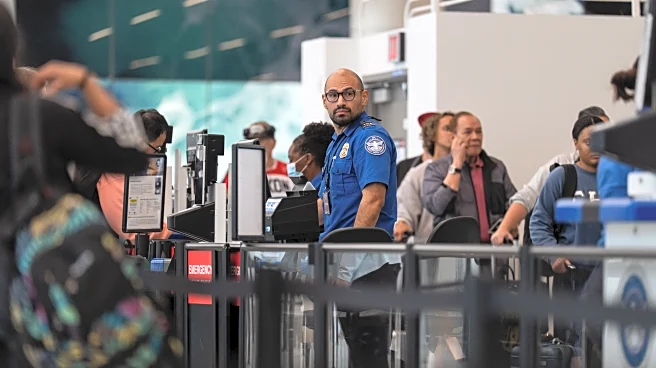
Congress has repeatedly failed to pass legislation ensuring that Federal Aviation Administration (FAA) and Transportation Security Administration (TSA) workers receive pay during government shutdowns. Despite multiple bills being introduced, such as the
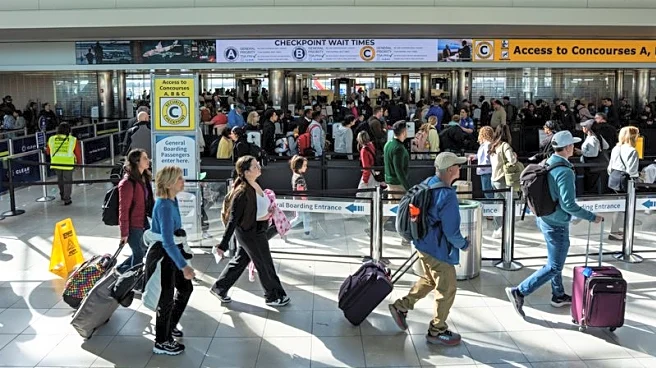
Aviation Funding Solvency Act and the Keep America Flying Act, these efforts have stalled. The issue gained prominence following a 35-day shutdown during President Trump's term, which caused significant disruptions in air travel. The most recent shutdown lasted 43 days, leading to flight reductions and staffing shortages. Despite public pressure and appeals from labor unions and industry leaders, Congress has not enacted measures to protect these workers' pay during funding lapses.
Why It's Important?
The failure to secure pay for FAA and TSA workers during shutdowns has significant implications for the U.S. aviation industry and public safety. Prolonged shutdowns can lead to operational disruptions, affecting millions of travelers and the economy. The uncertainty surrounding pay impacts worker morale and retention, potentially exacerbating staffing shortages. This issue highlights the broader challenge of political gridlock in Congress, where essential services are used as leverage in budget negotiations. The aviation sector, a critical component of the national infrastructure, remains vulnerable to these political impasses, underscoring the need for legislative action to ensure stability.
What's Next?
The ongoing political polarization in Congress suggests that passing legislation to protect FAA and TSA workers' pay during shutdowns will remain challenging. However, continued advocacy from labor unions, industry leaders, and public pressure could influence lawmakers to prioritize this issue. Future shutdowns may prompt renewed efforts to pass bipartisan bills like the Shutdown Fairness Act, which aims to maintain pay for essential federal workers. The aviation industry and affected workers will likely continue to push for legislative solutions to prevent disruptions and ensure financial security during government funding lapses.