






What's Happening?
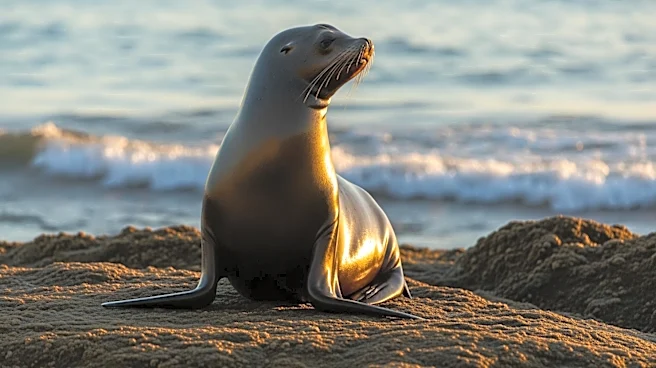
A large Steller sea lion, affectionately named 'Chonkers,' has become a viral sensation at Pier 39 in San Francisco, California. The sea lion has attracted significant attention from animal enthusiasts and social media users, with numerous photos and videos
circulating online. Chonkers, estimated to weigh between 1,500 and 2,000 pounds, has been observed lounging on docks among smaller California sea lions. The Marine Mammal Center, a California-based rescue and research organization, has been monitoring Chonkers since March 13, when they first received reports of his presence. Despite his size, Chonkers is considered healthy and is believed to be over five years old. Steller sea lions are typically larger and lighter in color compared to California sea lions, and sightings in San Francisco are rare as they usually inhabit regions further north.
Why It's Important?
The appearance of Chonkers in San Francisco highlights the unique biodiversity of marine life in the area and underscores the importance of conservation efforts. Steller sea lions, particularly the eastern stock to which Chonkers belongs, were removed from the endangered species list in 2013, marking a significant conservation success. The viral attention Chonkers has garnered can raise public awareness about marine wildlife and the ecological significance of preserving their habitats. Additionally, the presence of such a rare species in a popular tourist location like Pier 39 can boost local tourism and economic activity, as visitors flock to catch a glimpse of the sea lion.
What's Next?
As Chonkers continues to captivate the public, the Marine Mammal Center will likely maintain its monitoring efforts to ensure his well-being and gather data on his behavior and movements. The ongoing interest in Chonkers may prompt further educational initiatives by local wildlife organizations to inform the public about Steller sea lions and their conservation status. Additionally, the viral phenomenon could inspire similar conservation stories to gain traction, potentially influencing public policy and funding for marine conservation programs.
Beyond the Headlines
The fascination with Chonkers also reflects broader cultural trends in how social media can amplify interest in wildlife and environmental issues. The viral nature of Chonkers' story demonstrates the power of digital platforms to engage diverse audiences and foster a sense of community around shared interests. This phenomenon can lead to increased advocacy for wildlife protection and inspire individuals to participate in conservation efforts. Furthermore, the story of Chonkers may encourage discussions about the impact of human activities on marine ecosystems and the need for sustainable practices to protect these environments.