
What's Happening?
The Trump administration has announced a controversial legal fund that grants President Trump immunity from potential tax crimes for any taxes filed up to now. This legal fund, valued at $1.8 billion,
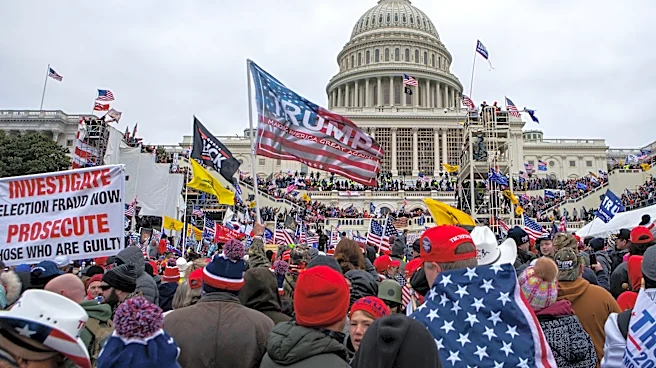
was initially popular among Jan. 6 rioters but faces closure due to opposition from Republican lawmakers and legal challenges. Acting Attorney General Todd Blanche has stated his commitment to providing immunity to President Trump despite questions regarding the legality and necessity of such immunity. Legal experts have criticized this move as an abuse of the tax and legal system, arguing that presidents do not have the authority to exempt themselves from personal liability for unpaid taxes. The immunity deal also covers Trump's family, businesses, trusts, and affiliated individuals, effectively barring the IRS from auditing or prosecuting them for tax-related matters.
Why It's Important?
The immunity deal has significant implications for the rule of law and the accountability of public officials. Critics argue that it undermines the legal system by suggesting that the president can evade scrutiny and legal consequences for tax-related issues. This could set a precedent for future administrations, potentially eroding public trust in government institutions. The deal also raises concerns about conflicts of interest, as President Trump has been actively trading in the stock market and engaging in various business ventures. The lack of IRS oversight could allow for tax evasion, impacting government revenue and fairness in tax enforcement. Legal experts suggest that the deal could be challenged in court, and future administrations may revisit Trump's tax filings.
What's Next?
Legal experts indicate that the immunity deal is not an official legal settlement and could be challenged in court. A federal court in Florida is currently reviewing the $10 billion lawsuit filed by Trump against the IRS, which was dismissed but recently reinstated to investigate potential fraud. Future presidential administrations may choose to scrutinize Trump's tax filings, and the Supreme Court's immunity for former presidents does not cover personal tax matters or extend to family members and businesses. The outcome of the court proceedings in Florida could influence the legal standing of the immunity deal.
Beyond the Headlines
The immunity deal highlights broader ethical and legal concerns regarding presidential powers and accountability. It raises questions about the balance between executive authority and legal constraints, as well as the potential for abuse of power. The deal could influence public perception of the presidency and the integrity of government institutions. Additionally, it underscores the importance of transparency and oversight in financial dealings of public officials, which are crucial for maintaining public trust and ensuring equitable enforcement of tax laws.