
What's Happening?
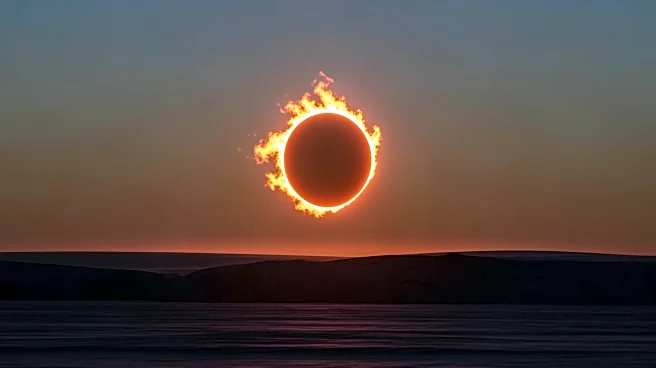
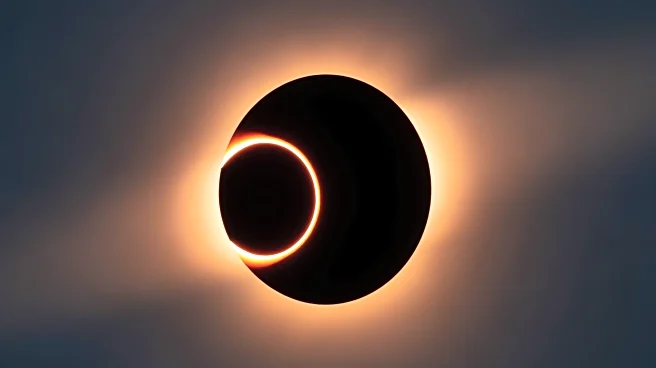
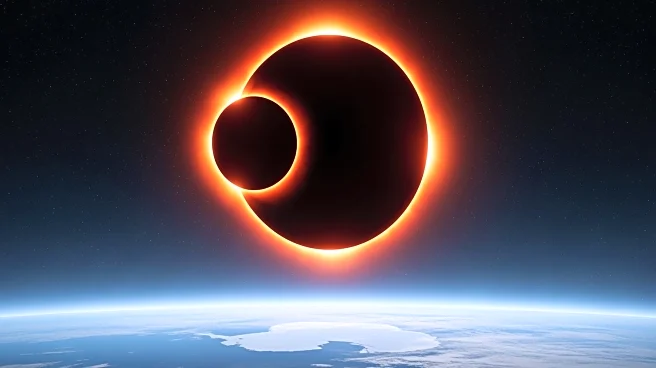
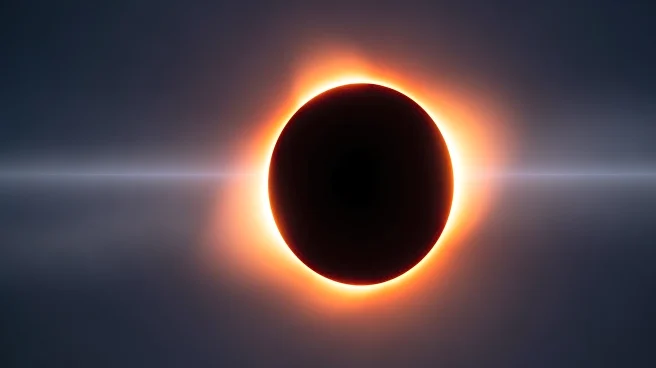
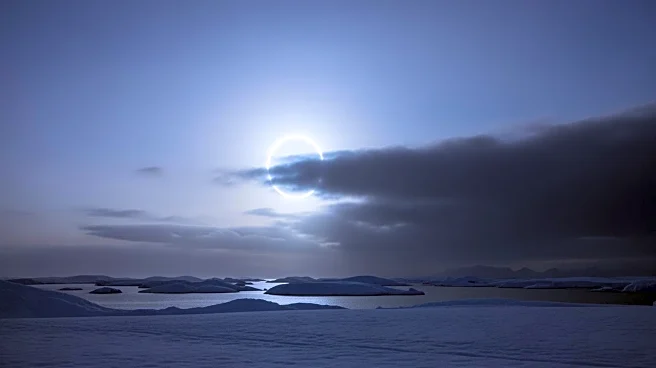
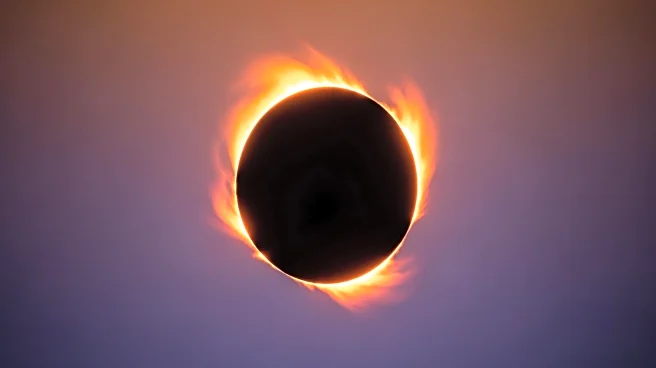
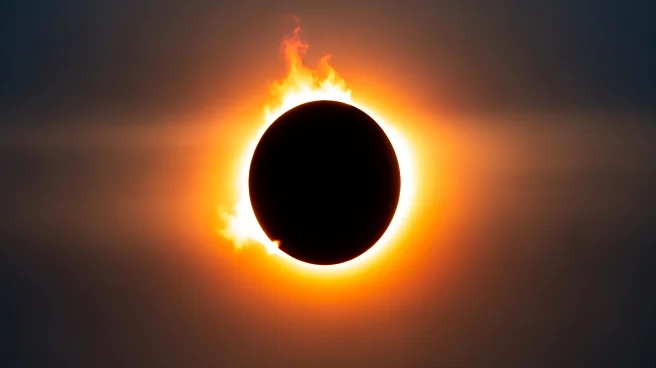
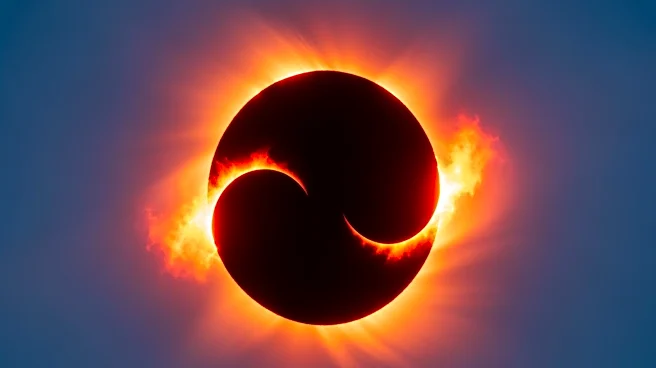
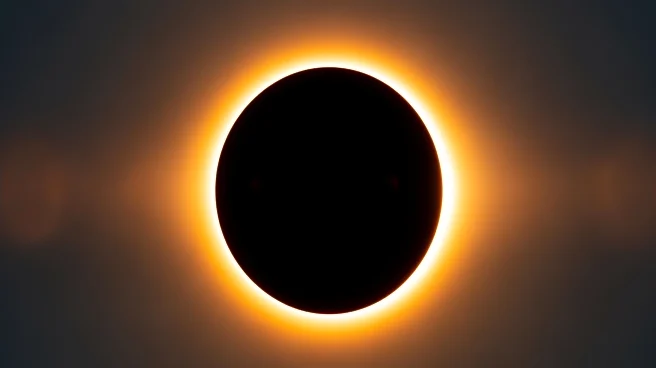
The first solar eclipse of 2026, an annular solar eclipse, is set to occur on February 17. This celestial event, often referred to as a 'ring of fire,' happens when the moon passes between the Earth and the sun but is too far from Earth to completely
cover the sun's disk. As a result, a bright outer ring of the sun remains visible. The eclipse will be visible as a partial eclipse from various locations, including parts of Antarctica, southern Africa, and southernmost South America. The path of annularity, where the full 'ring of fire' effect can be seen, will be limited to a small region in Antarctica.
Why It's Important?
This solar eclipse is significant as it marks a major highlight in the 2026 lunar calendar. Such events are rare and offer a unique opportunity for scientific observation and public interest in astronomy. The visibility of the eclipse from specific global locations underscores the importance of geographic positioning in astronomical events. For those in the path of annularity, it provides a rare chance to witness a natural phenomenon that can inspire interest in science and space exploration.
What's Next?
Following the solar eclipse, a lunar eclipse is expected on March 3-4, which will cast a reddish tint on the moon, often referred to as a 'Blood Moon.' This sequence of celestial events continues to engage both the scientific community and the public, offering further opportunities for observation and study.