
What's Happening?
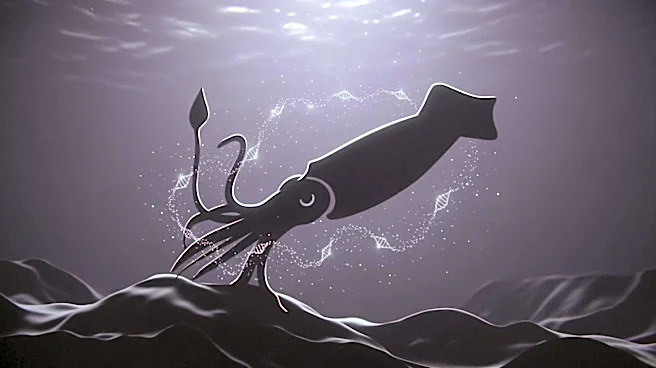
Researchers have detected a giant squid in the deep-sea canyons off the coast of Western Australia using environmental DNA (eDNA) techniques. This discovery marks the first record of a giant squid in this
region in over 25 years. The study, conducted by scientists from the University of Western Australia and Curtin University, involved collecting water samples to identify DNA traces of marine life. The findings, published in the journal Environmental DNA, reveal a rich biodiversity in the unexplored depths of the Cape Range and Cloates canyons.
Why It's Important?
The use of eDNA to detect marine life represents a significant advancement in marine biology, allowing scientists to study ecosystems that are otherwise difficult to access. This method provides a non-invasive way to monitor biodiversity and could play a crucial role in conservation efforts. The discovery of the giant squid and other rare species highlights the need for protective measures in these deep-sea environments, which face threats from climate change and human activities. Understanding these ecosystems is vital for informed management and conservation strategies.