



What's Happening?
Amit Kshatriya, NASA’s associate administrator, has highlighted the significant challenges SpaceX faces in developing in-orbit refueling capabilities, which are crucial for NASA's Artemis program to return humans to the Moon. The Artemis program relies
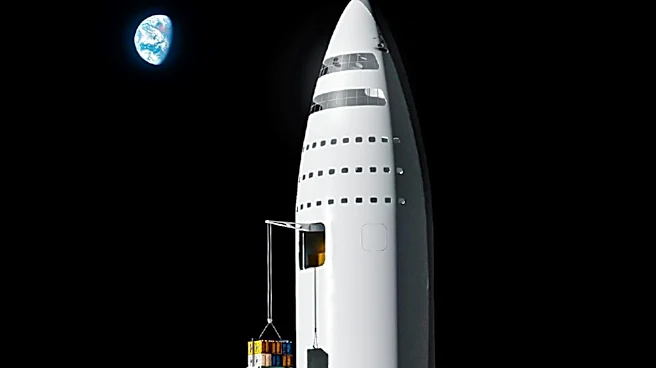
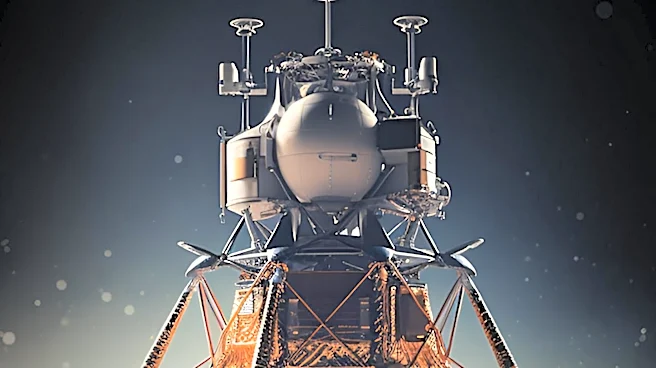
on commercial landers, specifically SpaceX's Starship Human Landing System (HLS) and Blue Origin's Blue Moon, both of which require in-orbit refueling to transport sufficient propellant for lunar missions. Kshatriya noted that while SpaceX has a 'good plan' for managing propellant transfer, the company still needs to fully understand 'slosh dynamics,' how 'ullage is being maintained,' and the necessary 'settling thrust.' This process involves transferring cryogenic propellants, such as liquid oxygen and liquid methane, between two docked vehicles in microgravity, a feat never before accomplished between independent spacecraft. SpaceX's approach includes using small thrusters to create artificial gravity to settle propellant and relying on pressure differentials for transfer. The full details of SpaceX's pressure management, sequencing, and transfer methods are still under development.
Why It's Important?
The successful development of in-orbit refueling is paramount for the future of U.S. deep-space exploration, particularly for NASA's ambitious Artemis program. Without this capability, the heavy landers required for lunar missions, like SpaceX's Starship HLS, cannot carry enough fuel to reach the Moon and return. This technological hurdle directly impacts the timeline and feasibility of establishing a sustained human presence on the Moon and eventually Mars. The ability to refuel in orbit would decouple deep-space mission capabilities from the single-launch mass constraint, making more ambitious and longer-duration missions possible. The challenges, such as managing cryogenic propellants at extremely low temperatures and controlling fluid dynamics in microgravity, represent a significant engineering frontier. The success or failure of SpaceX and Blue Origin in overcoming these obstacles will determine the pace and scope of U.S. human spaceflight for decades to come, influencing national prestige, scientific advancement, and the development of a new space economy.
What's Next?
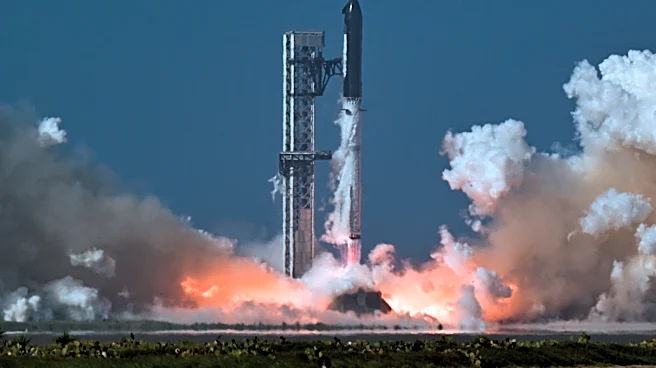
SpaceX is scheduled to conduct a critical demonstration flight in 2026 to prove its in-orbit cryogenic propellant transfer capabilities between two independent Starship vehicles. This test, which has already experienced delays, is a prerequisite for an uncrewed Starship HLS lunar landing demonstration. If successful, it will clear the path for the Artemis 4 crewed lunar landing, currently targeting early 2028. Blue Origin also faces similar challenges, with its own uncrewed demonstration mission for its Blue Moon lander, 'Endurance,' required before it can carry crew. The company recently experienced a setback with a New Glenn rocket explosion during a static fire test, which could impact its timeline. Both companies must resolve their refueling architectures and demonstrate the technology's reliability to meet NASA's certification requirements and the ambitious timelines of the Artemis program. The outcomes of these upcoming tests and demonstrations will directly influence the next phases of lunar exploration.
Beyond the Headlines
The pursuit of in-orbit refueling extends beyond merely enabling lunar missions; it represents a fundamental shift in space logistics and infrastructure. Successfully mastering this technology could transform space travel by making propellant a 'commodity' that can be launched cheaply and aggregated in low Earth orbit. This would open up possibilities for more flexible and cost-effective deep-space missions, potentially leading to the establishment of permanent space depots and a more robust space economy. The technical challenges, particularly concerning cryogenic fluid management in microgravity and long-duration storage, are pushing the boundaries of engineering and materials science. The development of zero boil-off (ZBO) storage systems, for instance, requires significant power and mass considerations, highlighting the complex trade-offs involved. The ethical implications of expanding human presence into space, resource utilization, and international cooperation in developing these critical technologies will also become increasingly prominent as these capabilities mature.