



What's Happening?
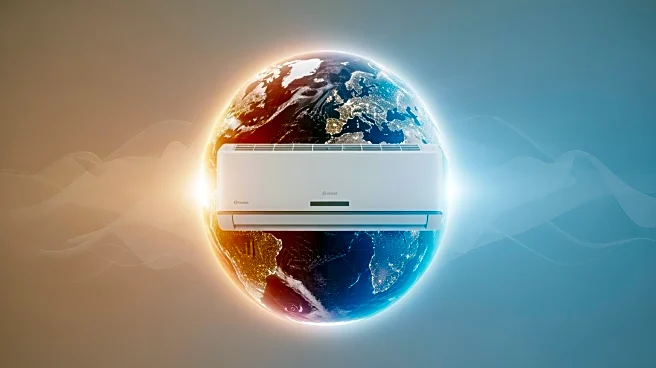
A study published in Nature Communications highlights the potential impact of increased air conditioning (AC) use on global warming by 2050. The study identifies rising incomes, urbanization, and falling appliance prices as primary drivers of AC growth.
It warns that AC-related emissions could increase global mean temperature by up to 0.05°C, primarily due to electricity consumption and refrigerant leaks. The study also notes a disparity in AC usage, with high-income regions using more AC despite less need, while hotter, low-income regions use less. Closing this cooling gap with current technologies could significantly increase greenhouse gas emissions.
Why It's Important?
The findings underscore the environmental challenges posed by the growing demand for air conditioning, particularly in the context of climate change. As global temperatures rise, the reliance on AC is expected to increase, leading to higher energy consumption and emissions. This presents a significant challenge for policymakers and industry leaders who must balance the need for cooling with environmental sustainability. The study highlights the importance of transitioning to cleaner energy sources and phasing out harmful refrigerants to mitigate the impact of increased AC use.
What's Next?
To address these challenges, the study suggests a two-pronged approach: accelerating the shift towards cleaner energy and improving building design to reduce reliance on AC. Policymakers may need to implement regulations to encourage the adoption of energy-efficient technologies and support research into alternative cooling methods. The development of new refrigerants with lower environmental impact could also play a crucial role in reducing emissions. As the demand for cooling continues to grow, these measures will be essential in minimizing the environmental impact of AC use.
Beyond the Headlines
The study highlights a broader issue of energy equity, as access to cooling remains limited in many low-income regions despite the increasing need due to rising temperatures. Addressing this disparity will require international cooperation and investment in sustainable cooling solutions. The findings also emphasize the interconnectedness of economic growth, energy consumption, and climate change, underscoring the need for integrated approaches to address these global challenges.