


What's Happening?
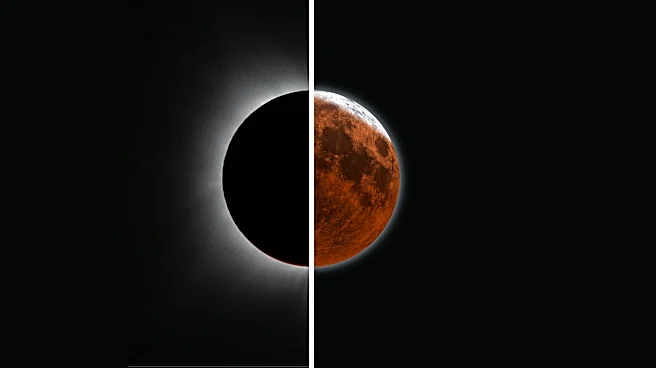
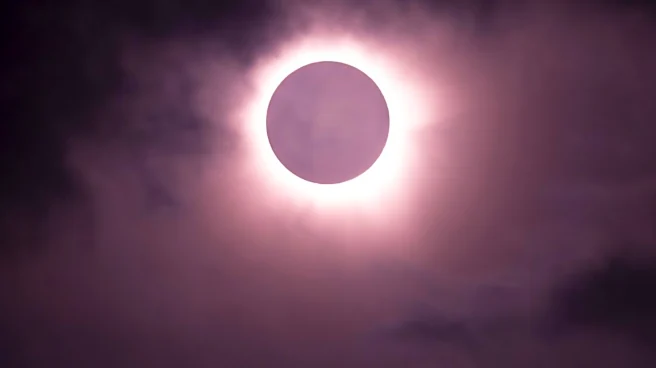
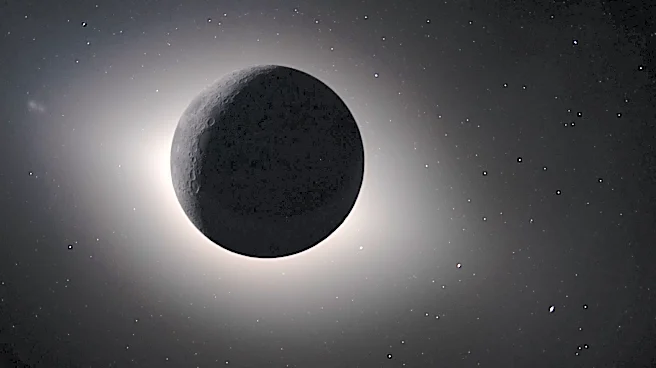
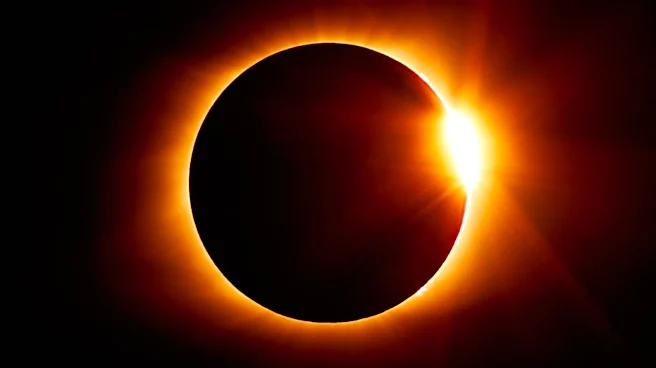
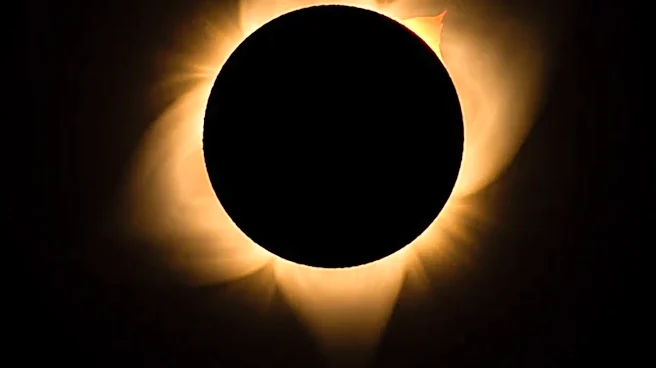
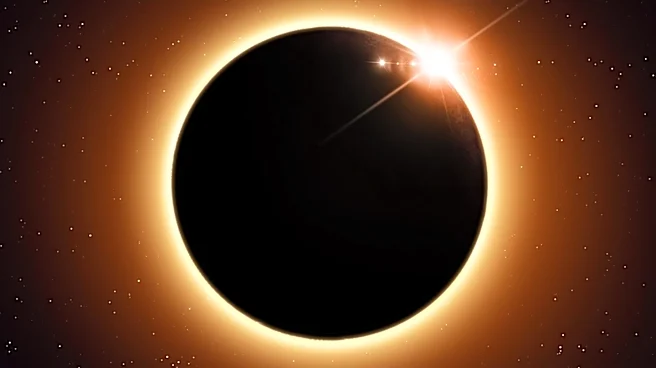
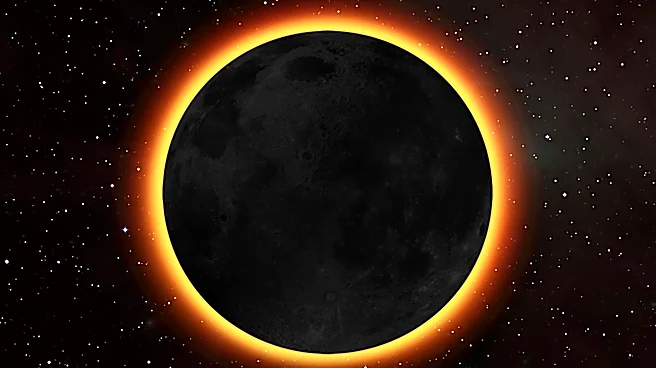
A total solar eclipse is set to occur on August 12, 2026, providing a rare celestial event visible across parts of the Iberian Peninsula, Greenland, and Iceland. The eclipse will begin near the North Pole and move southward, with totality lasting up to two
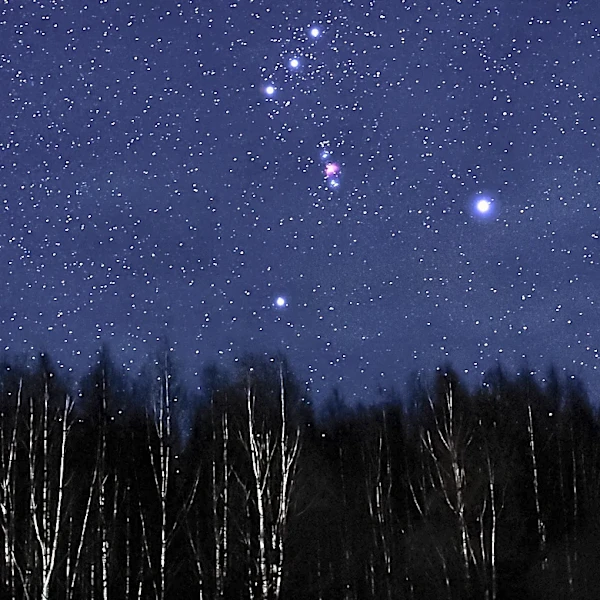
minutes and 18 seconds. This event precedes an even longer eclipse expected next year. The eclipse will also be partially visible in parts of North America, including the northern United States and Canada. Special eclipse glasses are recommended for safe viewing. The event coincides with a meteor shower and a planetary alignment, offering a unique astronomical experience.
Why It's Important?
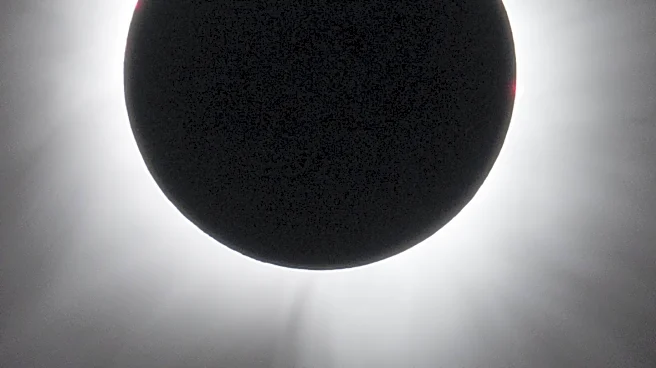
Total solar eclipses are rare phenomena that offer significant opportunities for scientific research and public engagement with astronomy. This event allows scientists to study the sun's corona and other atmospheric effects during the brief period of totality. For the public, it provides a chance to witness a spectacular natural event, fostering interest in science and astronomy. The alignment with other celestial events, such as the Perseid meteor shower, enhances the educational and inspirational value of the experience.
What's Next?
As the eclipse approaches, various organizations, including NASA and the European Space Agency, will provide live coverage and educational resources to maximize public engagement. Scientists will conduct experiments and observations to gather data on solar and atmospheric phenomena. Public viewing events and educational programs will be organized to facilitate safe and informative experiences for viewers. The anticipation of next year's longer eclipse will likely increase interest and preparation for future astronomical events.