





What's Happening?
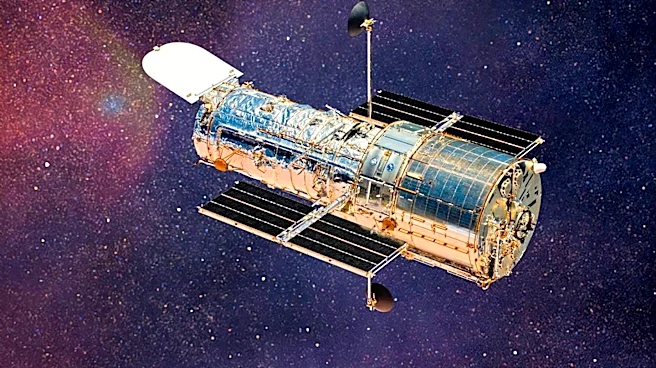
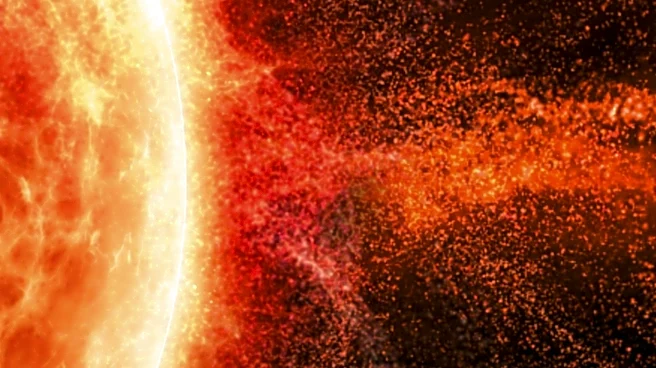
The European Space Agency (ESA) is set to launch a CubeSat mission named HENON in early 2027, designed to improve solar storm forecasting. The mission will place a CubeSat ten times farther from Earth than current solar storm sentinels, equipped with
a UK-built magnetometer to detect coronal mass ejections (CMEs) earlier. This advancement aims to extend the warning time for geomagnetic storms from 15 minutes to two to three hours, providing critical lead time for power grid operators, satellite controllers, and airlines. The HENON mission is a technology demonstration, with plans for a follow-up mission, SHIELD, to provide continuous coverage.
Why It's Important?
The HENON mission represents a significant step forward in space weather forecasting, potentially mitigating the impact of severe geomagnetic storms on critical infrastructure. By increasing the warning time, utilities can better prepare and protect power grids, reducing the risk of widespread outages and economic losses. The mission's success could lead to improved resilience against space weather events, which have historically caused significant disruptions, such as the 1989 Quebec blackout. The economic implications are substantial, with potential savings in the trillions by preventing damage to infrastructure and maintaining operational continuity.
What's Next?
Following the HENON mission, ESA plans to develop the SHIELD mission, which will deploy multiple CubeSats to provide continuous monitoring of solar storms. This future mission aims to address the limitations of a single spacecraft and ensure comprehensive coverage. The success of HENON will inform the design and deployment of SHIELD, potentially revolutionizing space weather forecasting and enhancing global preparedness for geomagnetic events.