
What's Happening?
The National Oceanic and Atmospheric Administration (NOAA) has released the 20th edition of its Arctic Report Card, revealing significant environmental changes in the polar region. The report, compiled
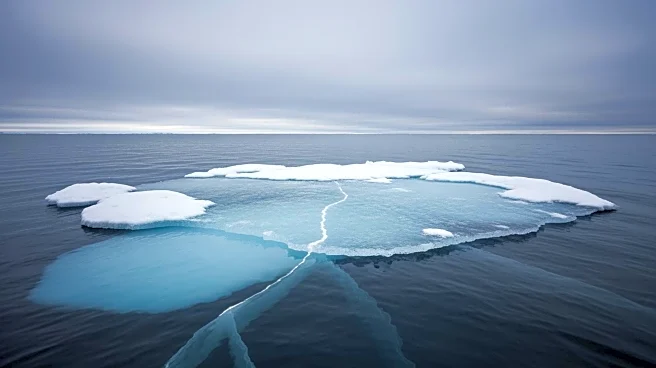
by approximately 100 scientists globally, indicates that the Arctic has experienced its hottest decade on record. Warm Atlantic waters are encroaching into the central Arctic Ocean, accelerating sea ice loss. This reduction in ice, which traditionally reflects sunlight, is contributing to further warming. Additionally, the thawing of Arctic permafrost is releasing carbon dioxide, exacerbating climate change. The report also notes increased precipitation and extreme weather events, with atmospheric rivers causing widespread rain and snow. Sea surface temperatures have reached record highs, and the extent of sea ice has diminished significantly. The oldest and thickest ice has decreased by over 95% since the 1980s. On land, rapid snowmelt and permafrost thawing are altering water quality, with phenomena like 'rusting' rivers being observed.
Why It's Important?
The findings of the Arctic Report Card are crucial as they highlight the Arctic's role as a global climate regulator. The changes in the Arctic have far-reaching implications, affecting weather patterns, sea levels, and ecosystems worldwide. The loss of sea ice and permafrost contributes to global warming, impacting agriculture, water resources, and biodiversity. The report underscores the urgency for climate action and the need for sustained scientific research to understand and mitigate these changes. The Arctic's transformation poses challenges for indigenous communities, wildlife, and global climate stability, emphasizing the interconnectedness of environmental health and human well-being.
What's Next?
The report's release comes amid concerns about climate science funding in the U.S., which is vital for continued research and monitoring. The findings may prompt policymakers to prioritize climate action and support scientific initiatives. As the Arctic continues to warm, international cooperation and policy interventions will be essential to address the environmental and socio-economic impacts. The report may also influence public awareness and drive advocacy for sustainable practices and policies to combat climate change.
Beyond the Headlines
The Arctic's environmental changes have ethical and cultural dimensions, particularly for indigenous communities whose livelihoods and traditions are intertwined with the natural environment. The report highlights the need for inclusive climate policies that consider the rights and knowledge of indigenous peoples. Additionally, the Arctic's transformation could lead to geopolitical shifts as nations vie for access to new shipping routes and resources. The report serves as a call to action for global leaders to address the root causes of climate change and work towards a sustainable future.