



What's Happening?
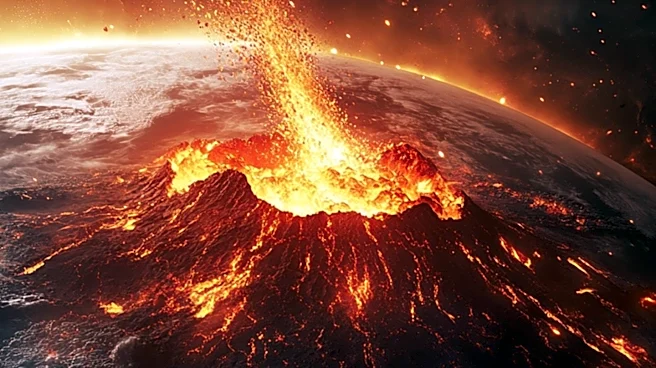
New research, drawing on the experiences of science communicators and an analysis of hundreds of international media articles from 2017 to 2022, indicates that misinformation about volcanoes can spread more widely than volcanic ash during eruptions. The
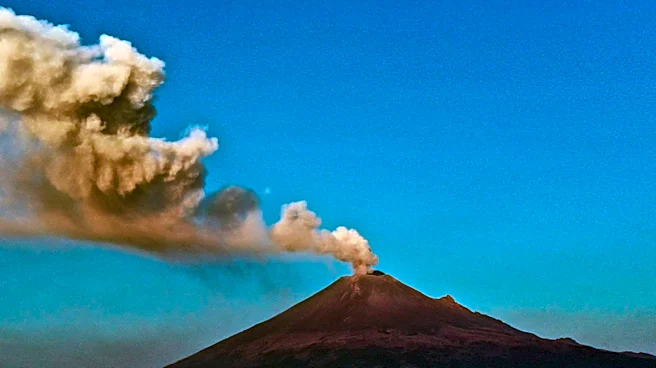
study, published by The Conversation, identified 18 common misconceptions, ranging from seismology and volcanic hazards to climate and eruption timescales. These misconceptions often involve attention-grabbing terms like the Pacific Ring of Fire or supervolcanoes, and can also stem from basic misunderstandings, such as describing volcanic ash as 'smoke' when it is composed of rock fragments, crystals, and volcanic glass. The research highlights how false claims and misleading images, amplified by rolling news coverage and social media, can distort public perceptions of hazards and risks, influencing how people respond to volcanic events. Examples include old footage being presented as current activity during the 2017 Mt Agung eruption in Bali and exaggerated reports surrounding the Yellowstone volcano in the United States.
Why It's Important?
The spread of misinformation during natural disasters, particularly volcanic eruptions, poses significant risks to public safety and resource allocation in the U.S. and globally. Exaggerated or false information can lead to unnecessary panic, hinder effective evacuation efforts, and misdirect emergency services. For instance, the study noted how misinformation about the Yellowstone volcano, often portrayed as an 'overdue' supervolcano capable of destroying humanity, can fuel public anxiety and lead to an overestimation of immediate threats, while underestimating more localized, yet still dangerous, hazards. This can result in a misallocation of resources, as authorities might be forced to address public fears rather than focusing on actual, scientifically assessed risks. Economically, misinformation can also have a detrimental impact on tourism and local businesses, as seen with the Mt Agung eruption, where false reports led to tourist cancellations. The study underscores the critical need for accurate and timely communication from official sources to maintain public trust and ensure effective disaster response.
What's Next?
The research aims to help journalists communicate volcanic hazards more accurately and equip the public to recognize misleading information. Recommendations include checking sources, prioritizing information from organizations responsible for monitoring and managing volcanoes (such as observatories and geological agencies), and considering whether experts are speaking within their area of expertise. It is also crucial to distinguish between what is possible and what is likely when reporting on future volcanic activity. The study advises caution when sharing images and videos online, especially with the rise of AI-generated content, by verifying their credibility and origin. Moving forward, there will likely be an increased emphasis on science communication training for journalists and public education initiatives to improve media literacy regarding natural disasters. Collaboration between scientists, media outlets, and emergency management authorities will be essential to develop clearer communication strategies that convey scientific uncertainty without causing undue alarm, ensuring that the public receives reliable information during volcanic crises.
Beyond the Headlines
Beyond the immediate concerns of public safety and disaster response, the study on volcanic misinformation touches upon broader societal issues related to trust in science and institutions. The ease with which false narratives can spread, particularly through social media, highlights a growing challenge in an increasingly digital world. The portrayal of Yellowstone as an 'overdue' supervolcano, for example, reflects a cultural fascination with catastrophic events, often amplified by documentaries and disaster films, which can overshadow scientific consensus. This phenomenon can erode public trust in scientific experts and official warnings, making communities more vulnerable to future crises. The research implicitly calls for a re-evaluation of how scientific information is disseminated and consumed, advocating for a more critical approach to media content. It also underscores the ethical responsibility of media organizations to verify information rigorously and avoid sensationalism, especially when reporting on potentially life-threatening natural phenomena. The long-term implication is the need for a more resilient information ecosystem that can effectively counter misinformation and foster a more informed public.