
What's Happening?
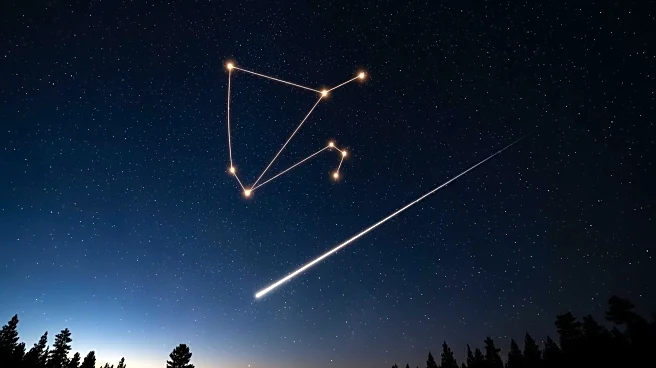
The Ursid meteor shower, marking the final celestial event of the year, is set to peak between Sunday night and early Monday morning. Skywatchers in the Northern Hemisphere can expect to see five to ten
meteors per hour during this period. The meteor shower coincides with the winter solstice, providing optimal viewing conditions due to the longest night of the year and a faint crescent moon. The Ursids originate from the Ursa Minor constellation and are caused by Earth passing through debris left by comet 8P/Tuttle. This year's shower may see enhanced activity due to previous debris streams from the comet.
Why It's Important?
The Ursid meteor shower offers a unique opportunity for skywatchers to witness a natural spectacle, fostering public interest in astronomy and the natural world. The event highlights the dynamic nature of our solar system and the ongoing interactions between Earth and celestial bodies. For scientists, meteor showers like the Ursids provide valuable data on cometary debris and its impact on Earth's atmosphere. The shower also serves as a reminder of the importance of preserving dark skies for astronomical observations, encouraging efforts to reduce light pollution.
What's Next?
Following the Ursid meteor shower, the new year will begin with another celestial event: the Quadrantid meteor shower, coinciding with January's full moon. This event will offer another opportunity for skywatchers to engage with the night sky, although the full moon's brightness may affect visibility. Continued public interest in such events may lead to increased participation in astronomy clubs and educational programs, promoting a deeper understanding of our place in the universe.