






What's Happening?
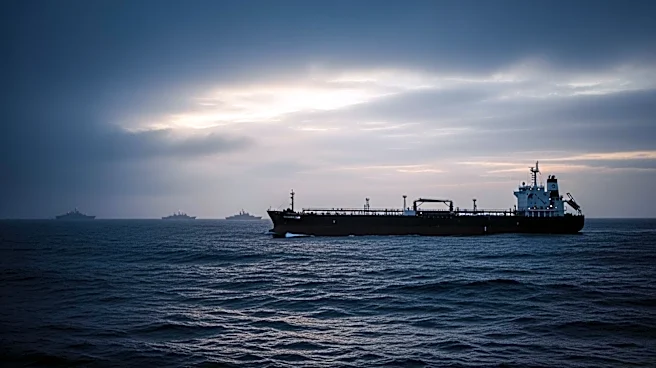
The United States has extended a new peace proposal to Iran amidst ongoing hostilities in the Strait of Hormuz. Despite the offer, Iran has yet to respond, and tensions remain high as both nations continue to exchange fire in the region. The proposal aims
to de-escalate the conflict and potentially bring an end to the ongoing war. The situation in the Strait of Hormuz is critical, as it is a strategic waterway through which a significant portion of the world's oil supply is transported. The lack of response from Iran leaves the future of the peace proposal uncertain, and the potential for further conflict remains.
Why It's Important?
The ongoing conflict between the US and Iran in the Strait of Hormuz has significant implications for global oil markets and international security. The strait is a vital chokepoint for oil transportation, and any disruption could lead to increased oil prices and economic instability. The US peace proposal represents an effort to stabilize the region and prevent further escalation, which could have widespread economic and geopolitical consequences. The lack of response from Iran suggests that diplomatic efforts may face challenges, potentially prolonging the conflict and its associated risks.
What's Next?
If Iran decides to engage with the US peace proposal, it could lead to negotiations aimed at de-escalating the conflict. However, if Iran continues to withhold a response, the US may need to consider alternative strategies to address the situation. The international community will likely monitor the developments closely, as any resolution could impact global oil markets and regional stability. Further diplomatic efforts or military actions could be anticipated depending on Iran's decision.