

What's Happening?
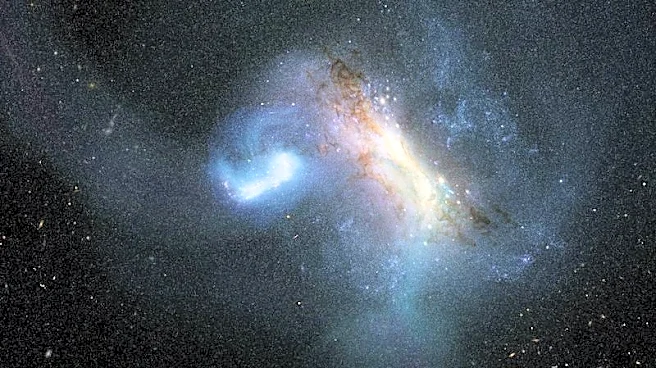
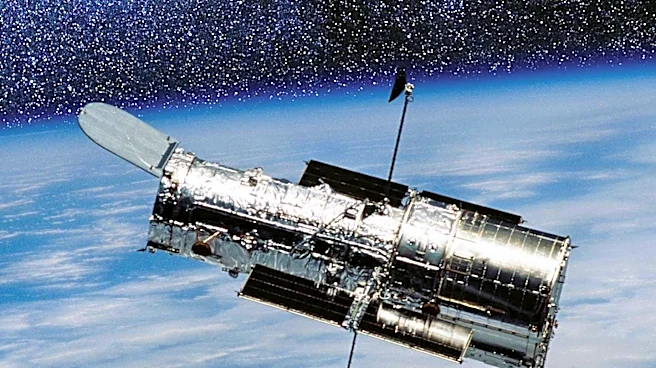
New data from the NASA/ESA Hubble Space Telescope, combined with information from ESA’s Gaia mission, has provided definitive evidence of a dwarf galaxy merging with the young Milky Way galaxy in its earliest evolutionary phases. This discovery pushes
back the known history of our galaxy by 1.8 billion years. Researchers studied 39 globular clusters within the inner 20,000 light-years of the Milky Way, which are ancient star collections that act as 'cosmic archaeological sites.' By analyzing the age and metal content of these clusters, scientists identified a third population of globular clusters. These clusters are older than those from the Gaia-Sausage-Enceladus merger (10 billion years ago) but younger than those originally formed in the Milky Way. This indicates they originated from an even earlier merger, approximately 11.8 billion years ago, just 2 billion years after the Big Bang. The dwarf galaxy involved in this merger has been named Low-energy-Kraken-Heracles (LKH) and contained roughly 500 million times the mass of the Sun in stars, representing a significant portion of the Milky Way's mass at that time.
Why It's Important?
This finding significantly alters our understanding of the Milky Way's formation and early evolution. Previous studies often assumed that the earliest phases of our galaxy's development were solely defined by stars born within it. However, this new evidence demonstrates that stars from external galaxies also played a crucial role in the Milky Way's initial growth. The identification of the LKH merger highlights that our galaxy was built through a series of significant mergers, not just internal star formation. This revised perspective on galactic assembly has profound implications for astrophysical models and simulations of galaxy evolution. Understanding these ancient mergers helps scientists piece together the complex history of how massive spiral galaxies like the Milky Way came to be, influencing our comprehension of cosmic structures and the distribution of matter in the universe.
What's Next?
The research team plans to continue their work by studying more globular clusters to further unravel the Milky Way's history. Their goal is to characterize all the massive mergers our galaxy has experienced throughout cosmic history. Fernando Aguado-Agelet, a co-author from the University of Vigo and the University of La Laguna in Spain, stated that Hubble's observations of previously unstudied globular clusters will be instrumental in characterizing these ancient merger events. This ongoing research will likely lead to a more comprehensive timeline of galactic mergers and a deeper understanding of the processes that shaped the Milky Way into the galaxy we observe today. Future studies may also explore the implications of these findings for the formation of planetary systems and the conditions for life within our galaxy.
Beyond the Headlines
The discovery of the LKH merger underscores the dynamic and violent nature of galaxy formation in the early universe. It challenges the notion of a purely internal growth model for the Milky Way, emphasizing the importance of accretion and mergers with smaller galaxies. This research also highlights the power of combining data from different space telescopes, like Hubble and Gaia, to reconstruct events that occurred billions of years ago. The concept of 'cosmic archaeological sites' in globular clusters provides a unique method for peering into the deep past of our galaxy, offering insights into the origins of its stellar populations. This continuous refinement of our galactic history contributes to a broader cosmological narrative, helping us understand our place within the vast and evolving universe.