





What's Happening?
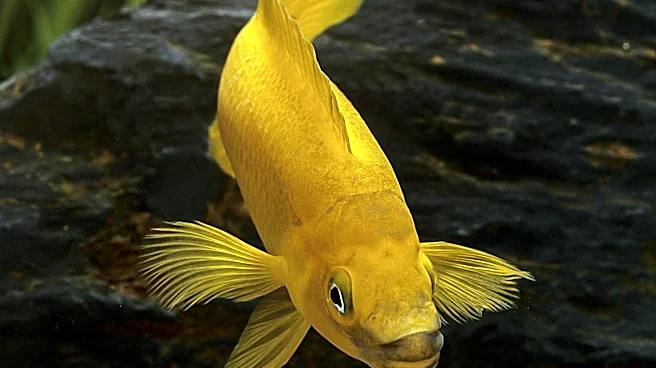
A U.S. Fish and Wildlife Service survey crew discovered a rare yellow burbot in Oswego Harbor, New York, located on the southeastern side of Lake Ontario, in October. This finding is particularly notable because burbot populations in the lake are currently
very low, and the species typically inhabits deeper, cooler waters than those found in the harbor. The fish exhibited xanthochromism, a genetic mutation that results in an excessive yellow or orange pigment in an animal's scales and fins. This condition is less common than albinism in the wild. The discovered burbot was not released due to its declining body condition and has been sent to Cornell University College of Veterinary Medicine for further study. This discovery occurred during a routine Aquatic Invasive Species Survey aimed at early detection of environmental issues within the Great Lakes system.
Why It's Important?
The discovery of a yellow burbot in Lake Ontario holds significant importance for ecological research and conservation efforts in the Great Lakes. The rarity of burbot in the lake makes any sighting notable, but the genetic mutation of xanthochromism adds another layer of scientific interest. Studying this specimen at Cornell University could provide valuable insights into genetic variations within fish populations and their adaptability to changing environments. Furthermore, the fact that it was found in Oswego Harbor, an atypical habitat for burbot, could indicate shifts in fish distribution or environmental conditions within Lake Ontario. This event underscores the critical role of ongoing aquatic invasive species surveys, as they not only monitor for threats but also uncover rare biological phenomena that contribute to a broader understanding of aquatic ecosystems.
What's Next?
The yellow burbot is currently undergoing study at Cornell University College of Veterinary Medicine. Researchers will likely analyze its genetic makeup to understand the specific mutation causing xanthochromism and investigate any other physiological characteristics. This research could contribute to broader studies on fish genetics, population health, and environmental indicators in the Great Lakes. The U.S. Fish and Wildlife Service will continue its Aquatic Invasive Species Survey, which employs various methods like electrofishing, fyke nets, and gill nets to collect specimens. Future surveys will remain crucial for monitoring burbot populations and detecting other rare species or invasive threats, providing ongoing data for conservation strategies and ecosystem management in the region.
Beyond the Headlines
The discovery of the yellow burbot in Lake Ontario highlights the subtle yet profound impacts of genetic diversity and environmental factors on aquatic life. Xanthochromism, while visually striking, often poses a disadvantage to affected animals in the wild due to increased visibility to predators, potentially leading to shorter lifespans. This case serves as a natural example of how genetic anomalies can influence survival rates and population dynamics. Beyond its immediate scientific value, the finding also draws attention to the broader health of the Great Lakes ecosystem. The presence of a rare specimen, coupled with the generally low burbot populations, underscores the need for continuous monitoring and conservation efforts to protect native species and maintain ecological balance in one of North America's most vital freshwater systems. It also subtly reminds us of the hidden complexities and ongoing evolutionary processes within natural habitats.