

What's Happening?
Representative Maxine Waters, Ranking Member of the House Committee on Financial Services, confronted U.S. Treasury Secretary Scott Bessent during a Congressional hearing. Waters criticized the U.S. government's oil restrictions and sanctions against
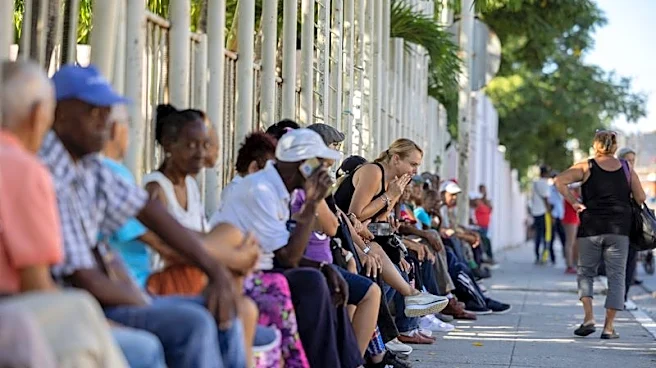
Cuba, arguing that these measures are creating a humanitarian and energy crisis on the island. She accused the administration's 'maximum pressure' policy and fuel blockade of causing starvation among Cuban families and children by preventing access to food and electricity. The restrictions on oil supply have reportedly led to widespread, prolonged blackouts, shortages of drinking water, and significant delays in the distribution of UN food aid. While the administration defends economic pressure as a strategic component of its sanctions policy, various sectors and activists are debating the humanitarian impact of these policies on Cuba's civilian population.
Why It's Important?
This confrontation highlights a significant point of contention within U.S. foreign policy regarding Cuba, specifically the humanitarian consequences of economic sanctions. The debate over the effectiveness and ethical implications of such sanctions has long been a feature of U.S.-Cuba relations. Representative Waters' direct challenge to the Treasury Secretary underscores a growing concern among some U.S. lawmakers about the impact of these policies on ordinary citizens, rather than solely on the targeted government. The discussion brings to the forefront the balance between diplomatic pressure and humanitarian concerns, potentially influencing future legislative efforts or policy adjustments related to Cuba. The reported shortages of essential resources like electricity, water, and food could also lead to increased migration pressures or regional instability, impacting U.S. interests in the Caribbean.
What's Next?
The confrontation is likely to fuel further debate within Congress and among policymakers regarding the U.S. approach to Cuba. Representative Waters' public stance could galvanize other lawmakers and advocacy groups to scrutinize the humanitarian impact of sanctions more closely. It may also prompt the Treasury Department to provide further justification for its current policies or to consider adjustments to mitigate humanitarian concerns. International organizations and human rights groups are also likely to continue monitoring the situation in Cuba and advocating for changes in U.S. policy. The ongoing discussion could lead to legislative proposals aimed at either strengthening or easing sanctions, depending on the political climate and evolving humanitarian situation.
Beyond the Headlines
Beyond the immediate policy debate, this event touches upon the broader ethical considerations of using economic sanctions as a tool of foreign policy. It raises questions about the responsibility of a sanctioning nation for the humanitarian consequences in the targeted country. The situation in Cuba, as described by Representative Waters, exemplifies the challenge of implementing sanctions that are intended to pressure a government without unduly harming its populace. This incident could contribute to a re-evaluation of the criteria and oversight mechanisms for imposing and maintaining such sanctions, potentially leading to a more nuanced approach that prioritizes humanitarian safeguards. It also highlights the persistent ideological divisions within U.S. politics regarding engagement with communist or socialist states.