






What's Happening?
Russia has released 24 Filipinos who were detained for months without charges in a Siberian city. This development followed a meeting between Philippine President Ferdinand Marcos Jr. and Russian President Vladimir Putin. The Filipinos are scheduled to
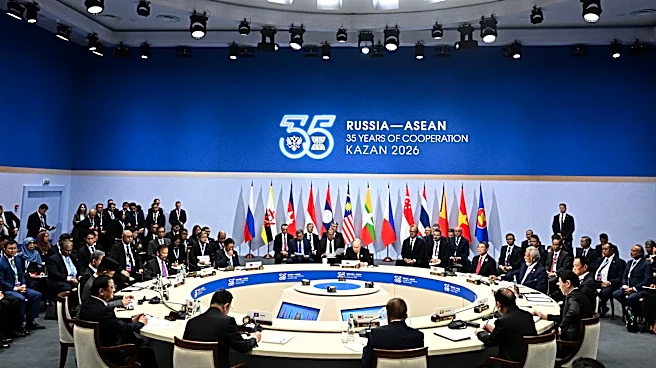
return to Manila, with the first group being welcomed by Philippine Foreign Secretary Theresa Lazaro. The release occurred after Marcos raised concerns during a bilateral meeting with Putin at a summit in Kazan, Russia. The Filipinos had been detained in Irkutsk, Siberia, for about nine months, possibly due to immigration law violations. Putin, initially unaware of the issue, assured Marcos that the situation would be resolved, leading to the Filipinos' deportation back to the Philippines.
Why It's Important?
The release of the Filipinos highlights the diplomatic influence and negotiation capabilities of the Philippines on the international stage. It underscores the importance of diplomatic dialogue in resolving international detentions and the role of ASEAN in fostering regional cooperation. The incident also reflects the complex geopolitical dynamics involving Russia, the Philippines, and ASEAN, especially given the Philippines' alignment with the U.S. and its stance on Russia's actions in Ukraine. This event may strengthen the Philippines' diplomatic ties with Russia and ASEAN, while also showcasing the potential for resolving international disputes through dialogue.
What's Next?
The return of the Filipinos to the Philippines is expected to be closely monitored by both the Philippine government and international observers. The incident may prompt further investigations into illegal job recruitment practices that led to the Filipinos' detention. Additionally, the Philippines may seek to enhance its diplomatic protocols to prevent similar situations in the future. The outcome of this diplomatic engagement could influence future ASEAN-Russia relations and the Philippines' foreign policy strategies.