




What's Happening?
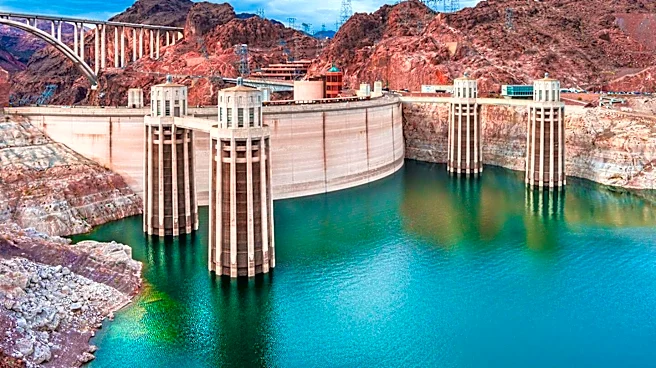
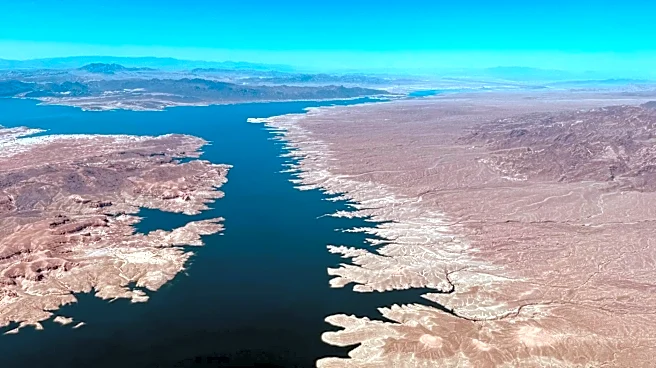
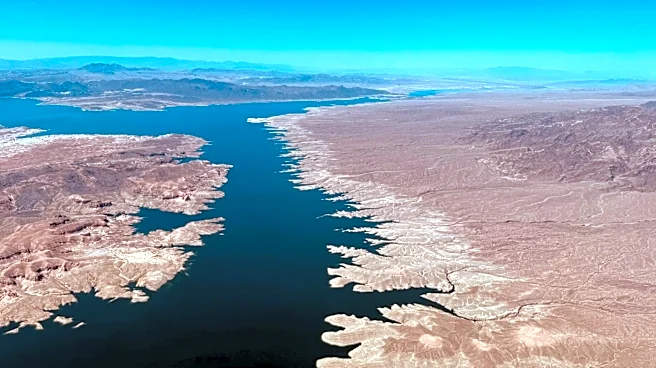
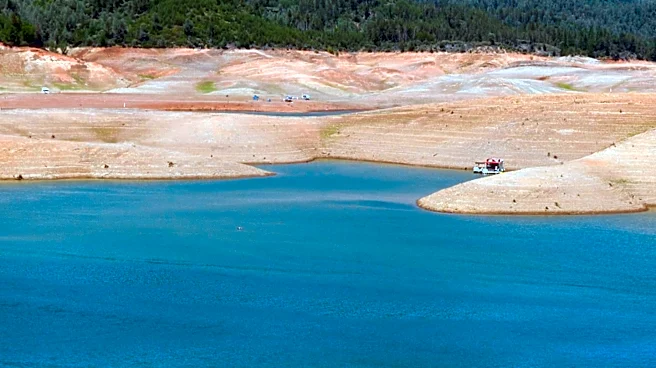
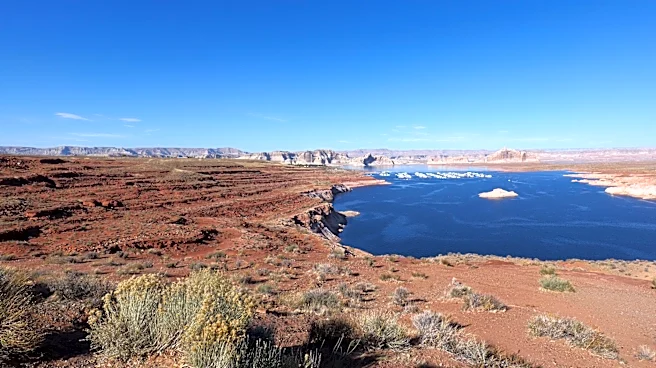
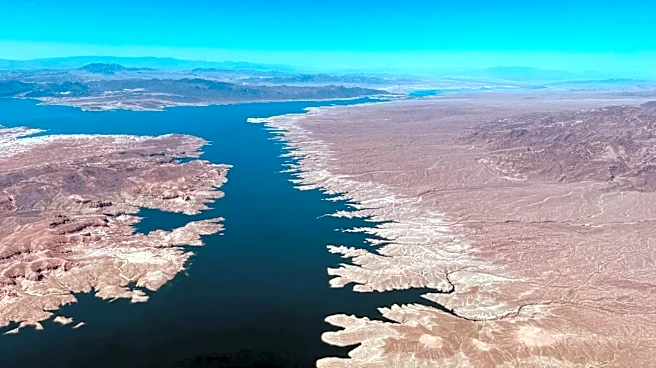
Lake Powell and Lake Mead, the two largest reservoirs in the United States, have reached their lowest combined level on record, marking a significant moment in the ongoing Colorado River water supply crisis. As of July 12, the combined live storage in these
reservoirs dropped to 12,675,509 acre-feet, breaking the previous record low set in March 2023. This decline is attributed to accelerated storage losses throughout 2026, with daily depletion rates reaching up to 16,661 acre-feet. The Colorado River is a crucial water source for millions of people and vast agricultural economies across several U.S. states and Mexico. The current situation has raised concerns about the river's ability to continue supporting water deliveries and hydropower generation.
Why It's Important?
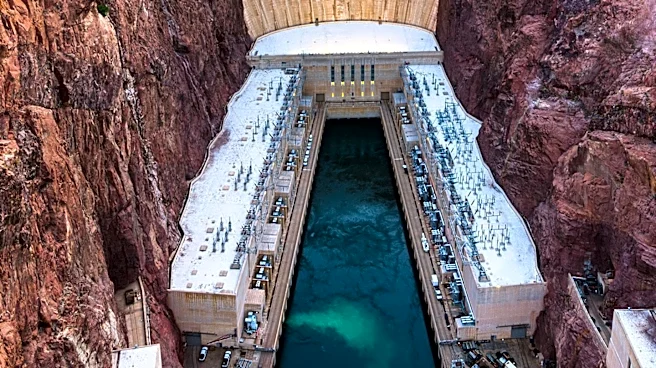
The Colorado River is vital for water supply, hydropower, and agriculture in the southwestern United States. The record low levels in Lake Powell and Lake Mead threaten the water security of approximately 40 million people and could disrupt agricultural activities that rely heavily on the river. The situation underscores the urgent need for sustainable water management practices and highlights the potential for a 'system crash' where the infrastructure supporting the river's operations may fail. This crisis could lead to significant economic and social impacts, particularly in regions dependent on the river for their water needs.
What's Next?
The federal government is considering new management strategies for the Colorado River, with potential water use reductions for Arizona, California, and Nevada. These decisions are critical as several operating agreements are set to expire at the end of the year. The outcome of these negotiations will determine how the shrinking water resources are allocated among the states. Additionally, scientists warn that by 2028, reservoir levels could fall so low that normal operations may no longer be possible, necessitating immediate action to prevent further deterioration.