




What's Happening?
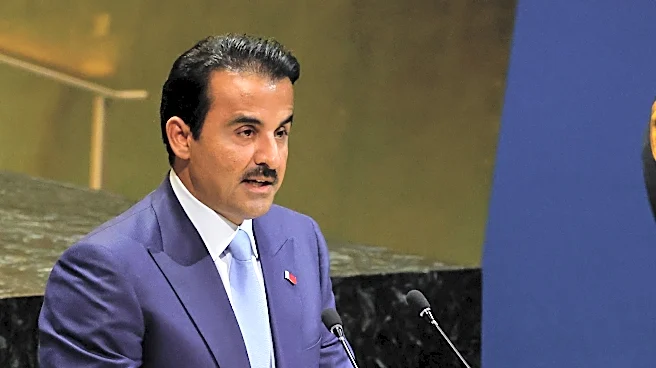
Qatar and Turkiye have signed a new mutual defense agreement, committing both nations to a common stance against external armed attacks. This pact emerged from the Turkiye-Qatar Supreme Strategic Committee meeting in Istanbul, co-chaired by Turkish President
Recep Tayyip Erdogan and Qatar’s Emir Sheikh Tamim bin Hamad Al Thani. The agreement aims to bolster collective defense, foster regional security, and establish a unified position against any external military aggression targeting either country. Analysts suggest this pact is designed to deter potential attacks rather than form an offensive alliance. The agreement also includes provisions for expanding joint military exercises, enhancing defense industry collaboration, and facilitating personnel training exchanges. The communique did not specify the exact triggers for the agreement or the form a joint response would take. Other agreements reached during the meeting covered education, consumer protection, and peace, reconciliation, and conflict resolution.
Why It's Important?
This mutual defense pact between Qatar and Turkiye holds significant implications for regional stability, particularly given the ongoing geopolitical shifts and heightened tensions in the Middle East. The agreement signals a deepening of security ties between two key U.S. allies, potentially influencing the balance of power in the region. For the U.S., this pact could be viewed as both a stabilizing force, by deterring aggression, and a complex factor, as it involves two nations with distinct, though often aligned, foreign policy objectives. The emphasis on joint defense manufacturing and indigenous capabilities also suggests a move towards greater self-reliance in military supply chains, which could impact global defense industries and U.S. arms sales. The pact's focus on countering 'terrorism in all its forms and manifestations' aligns with broader international counter-terrorism efforts, but its specific implementation will be crucial in assessing its impact on U.S. security interests.
What's Next?
Following the signing of the mutual defense pact, observers anticipate an expansion of military cooperation between Qatar and Turkiye. This could include joint projects in missile defense systems, drones, and armored vehicles, with Qatar potentially participating in advanced Turkish air defense initiatives. There is also speculation that these manufacturing projects could extend to other regional partners like Saudi Arabia and Pakistan. The agreement's long-term impact will depend on how it is operationalized and whether it leads to a more integrated defense posture between the two nations. The U.S. will likely monitor these developments closely, particularly regarding technology transfer and regional military capabilities. The pact's role in addressing regional security threats, including the ongoing conflict in the Strait of Hormuz, will be a key area of focus, as will its influence on diplomatic efforts to de-escalate tensions.
Beyond the Headlines
The mutual defense pact between Qatar and Turkiye reflects a broader trend in the Middle East where regional states are increasingly seeking new alliances and strengthening their defense capabilities amidst perceived shifts in the U.S. security umbrella. This move towards greater self-reliance and regional cooperation in defense manufacturing highlights a strategic imperative to secure supply chains and reduce dependence on external powers, especially in light of disruptions like those in the Strait of Hormuz. The pact also underscores the growing trust and convergence of security doctrines between Doha and Ankara, which has been tested through various political and security challenges since 2014. This deepening relationship, extending beyond defense to economic sectors like energy and trade, suggests a long-term strategic alignment that could reshape regional dynamics and influence the geopolitical landscape for years to come.