







What's Happening?
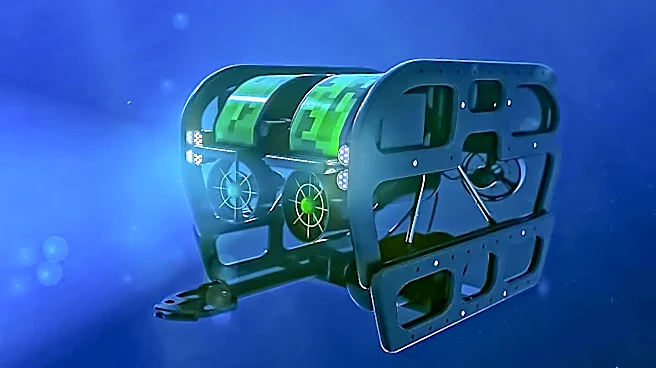
General Atomics has developed new long-range unmanned underwater vehicles (UUVs), named Ranger and GA-Ray, designed for a variety of missions including surveillance, mining, and strike operations. These UUVs are capable of launching sub-drones and carrying
extensive payload modules, aiming to support distributed underwater operations while reducing reliance on traditional attack submarines (SSNs). Concept graphics from General Atomics illustrate these glider-type UUVs launching from bases in Okinawa and Guam, enabling them to reach strategic locations such as First Island Chain chokepoints or the littoral waters of mainland China. Depending on the variant, these vehicles can carry between 16 and 96 smaller sub-UUVs. At Euronaval 2026, General Atomics also showcased a submarine-launched quadcopter UAV, with a video demonstrating its deployment from a tube launched by a UUV that Ranger or GA-Ray would carry. The Ranger UUV is 100-135 feet in size with a multi-year endurance, while the GA-Ray is 22 feet with an endurance of weeks to months.
Why It's Important?
The development of Ranger and GA-Ray UUVs by General Atomics represents a significant advancement in U.S. naval capabilities, potentially reshaping underwater warfare and surveillance strategies. By reducing reliance on manned attack submarines, these UUVs offer a cost-effective and less risky alternative for operations in contested waters. Their ability to launch multiple sub-drones and carry diverse payloads provides enhanced flexibility and operational reach, allowing for persistent presence and rapid response in critical maritime areas. This technology could significantly bolster U.S. defense posture in the Indo-Pacific region, particularly concerning strategic chokepoints and coastal areas. The long endurance of these UUVs also means sustained intelligence gathering and potential for pre-emptive actions, thereby enhancing national security and projecting power without direct human exposure to danger.
What's Next?
The continued development and potential deployment of these advanced UUVs will likely involve further testing and integration into existing naval frameworks. General Atomics will probably focus on refining the operational capabilities, payload integration, and autonomous decision-making processes of Ranger and GA-Ray. Future steps may include large-scale exercises to demonstrate their effectiveness in various mission scenarios and their interoperability with other naval assets. The U.S. Navy could explore expanding its UUV fleet, potentially leading to increased investment in autonomous underwater technologies. This could also spur other nations to accelerate their own UUV development programs, leading to a new phase of underwater arms race and strategic competition in maritime domains.
Beyond the Headlines
The introduction of highly autonomous UUVs like Ranger and GA-Ray raises profound ethical and strategic questions regarding the future of warfare. The ability to conduct surveillance, mining, and strike missions with minimal human intervention could blur the lines of accountability and decision-making in conflict situations. There are also concerns about the potential for these autonomous systems to escalate conflicts or make decisions without human oversight, particularly in complex and rapidly evolving scenarios. Furthermore, the proliferation of such advanced UUV technology could destabilize regional balances of power, prompting a re-evaluation of international maritime laws and arms control treaties. The long-term implications for global security and the nature of naval power will be a critical area of discussion and policy development.